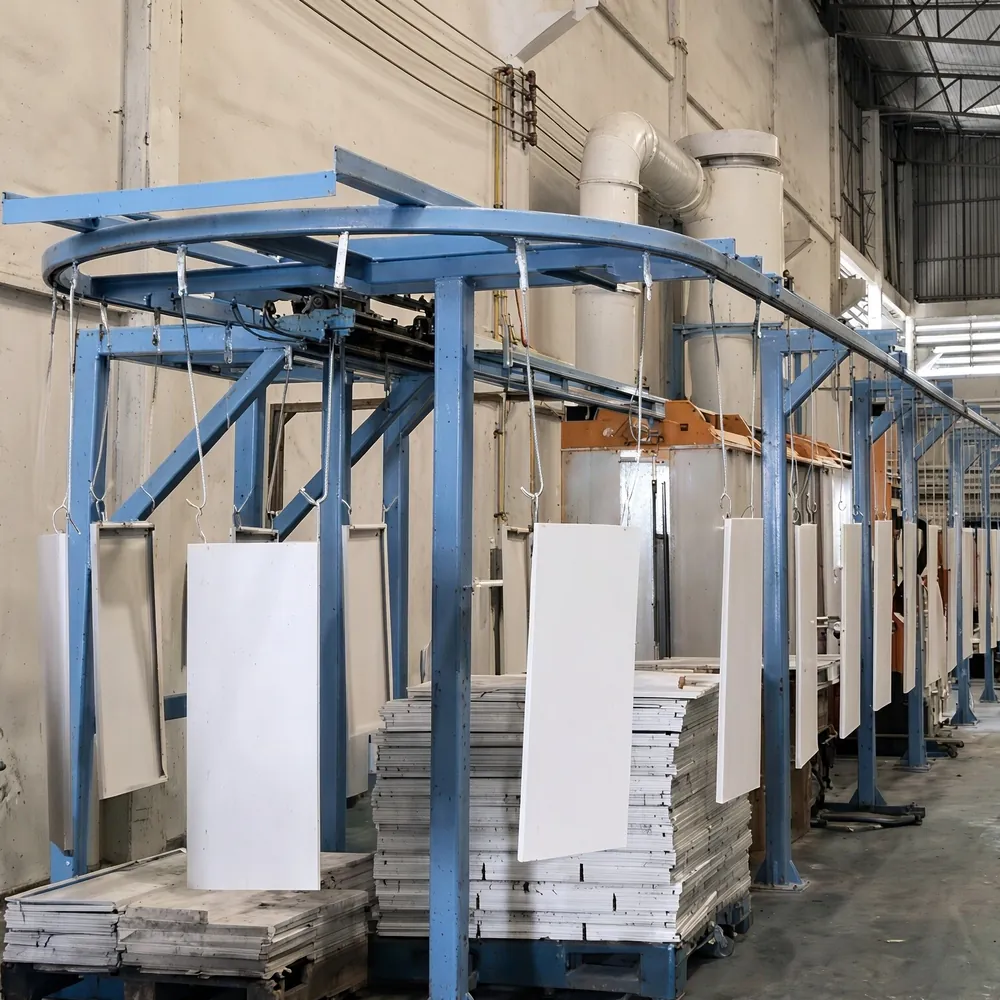
Overhead conveyors run for decades, but parts wear, and accidents happen. The question is which parts to keep on site, how many, and which to order when needed.
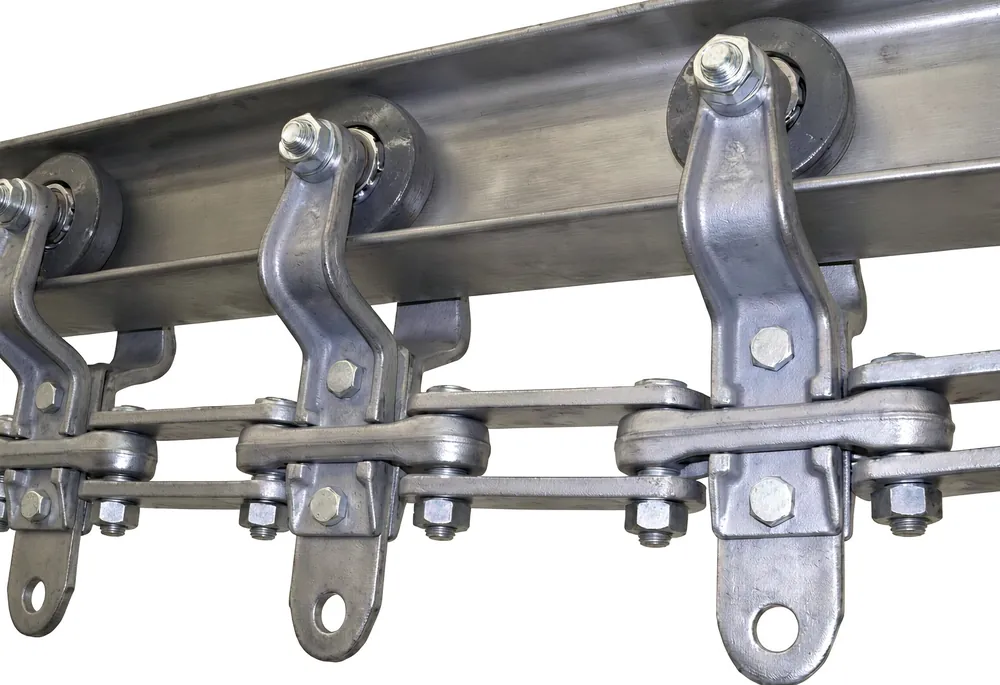
Classify parts by risk
| Class | Description | Stock policy |
|---|---|---|
| Critical | Failure stops the line; long lead time | Always on site |
| Wear parts | Wear in normal use; predictable consumption | Stock based on usage |
| Non-critical | Failure does not stop the line, or short lead time | Order when needed |
Typical spare parts by system
| System | Parts to consider |
|---|---|
| Chain conveyors | Chain links and pins, trolley wheels and brackets, attachments, curve rollers |
| Drives and take-ups | Drive chain and dogs, sprockets, gear motor or gearbox, couplings, overload switch |
| Power and free | Pusher dogs, front trolley levers, stop blades, cylinders, switch tongues |
| EMS | Drive wheels, guide wheels, collector carbons, carrier controller, hoist belts |
| Electrical | Inverters, sensors, relays, fuses, HMI panel |
| Lubrication | Lubricator pumps, nozzles, lubricant |
Setting quantities
For wear parts, use the consumption rate and lead time:
Minimum stock = monthly use × lead time (months) + safety stock
Example: a line uses 20 trolley wheels per month and the lead time is 2 months. With a safety stock of 20, keep at least 20 × 2 + 20 = 60 wheels.
Good practice
- Ask the supplier for a recommended spare parts list with part numbers
- Store parts clean, dry and labelled; protect bearings and electronics
- Record every part used to refine stock levels
- Back up PLC and inverter parameters so replacements can be set up quickly
- Review the list after every major breakdown
Questions to ask your supplier
- Which parts are critical for our line, and what are their lead times?
- Are standard brands used that we can buy locally?
- Can you supply a first spare parts kit with the line?
See the maintenance checklist, rivetless chain and HITREE service.
Common mistakes to avoid
- Keeping many cheap parts but no spare drive or inverter
- Storing bearings and electronics in damp, dusty areas
- No record of parts used, so stock levels never improve
- Parts without part numbers, so reordering is slow
Spare parts review checklist
| Question | Action |
|---|---|
| Which parts were used most? | Raise minimum stock |
| Which breakdowns took longest? | Add the missing parts |
| Which parts have long lead times? | Keep at least one on site |
| Which parts were never used? | Check if still needed |