
Industries
Automotive Conveyor Systems
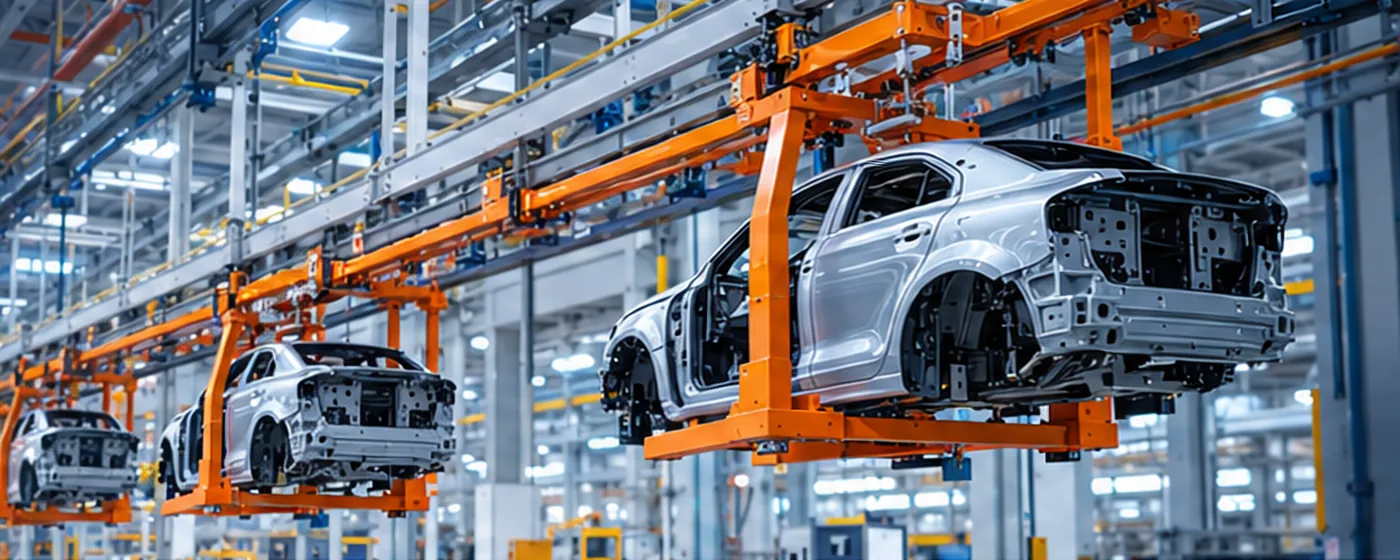
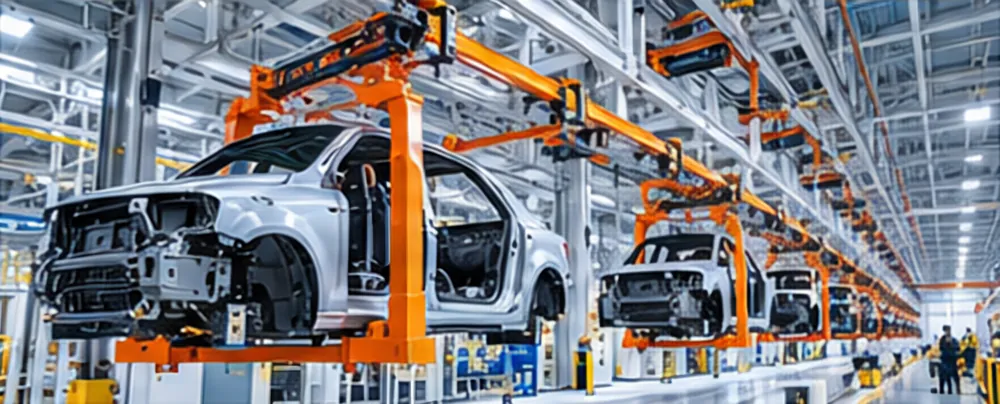
From body in white to final assembly, overhead conveyors carry car bodies and components through every stage of vehicle production.
Built for Vehicle Production
Automotive lines demand high throughput, precise positioning and model mix flexibility. Overhead conveyors deliver this while keeping the floor free for people, robots and logistics.
We use EMS for assembly areas where carriers must stop precisely and change height, and power and free for paint shops, ovens and long storage buffers.
Recommended systems
Where We Help
Automotive Applications
Body in white
Transport between welding cells, robot stations and storage.
Paint shop
Power and free through pretreatment, booths and curing ovens.
Trim and final assembly
EMS carriers with height adjustment for ergonomic work.
Body storage
Buffers that sequence bodies between body shop, paint and assembly.
EV battery packs
Precise, clean conveying for battery module and pack assembly.
Component sub-assembly
Doors, cockpits, axles and powertrain feeding the main line.
FAQ
Frequently Asked Questions
Which conveyor is used in automotive final assembly?
EMS overhead conveyors are common in trim and final assembly because carriers can stop precisely and adjust the body height for each work step.
Which conveyor is used in automotive paint shops?
Power and free conveyors, often inverted, are widely used in paint shops because they handle pretreatment, booths and ovens and provide accumulation.
Can one line handle several vehicle models?
Yes. Carriers and stations are designed for the model range, and buffers and bypasses support model mix production.
Planning a New Production Line?
Let our engineers design the right conveyor solution for your application.
WhatsApp Us Discuss Your Project