

Solutions
Lift & Lower Stations
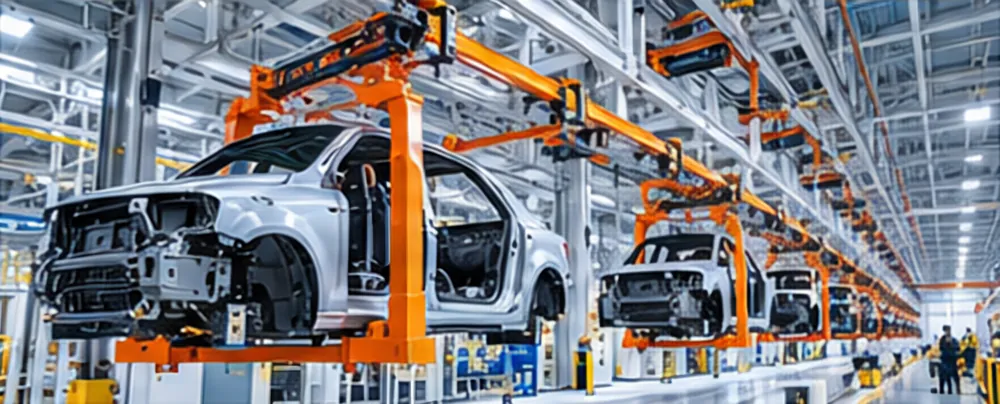
Products travel overhead to save floor space, then come down exactly where people, robots or floor conveyors need them.
Height Where It Helps
Overhead transport keeps aisles free, but work has to happen at a comfortable height. Lift and lower equipment bridges that gap.
We use lift stations, drop sections and carriers with onboard hoists. The choice depends on the travel height, cycle time and how often the height needs to change along the line.
- Ergonomic working heights for assembly operators
- Accurate hand-over to robots and fixtures
- Transfers between overhead conveyors and floor conveyors
- Level changes between floors and mezzanines
How We Do It
Lift Solutions
Lift stations
Vertical lifts that lower a rail section with the carrier on it.
Drop sections
Short lowering sections for load and unload stations.
Onboard hoists
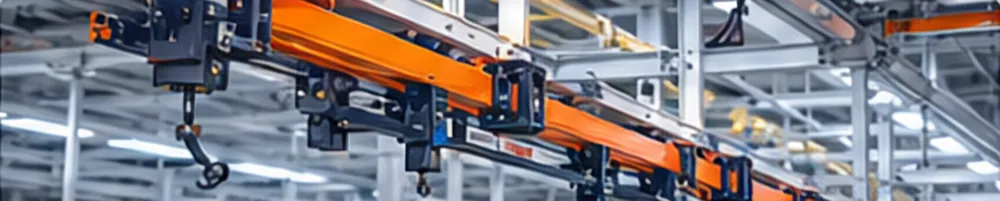
EMS carriers that adjust height while travelling.
Tilting and rotating
Carriers that turn the product for better access.
Safety design
Guarding, fall protection and safe zones around moving loads.
Height profiles
Different heights per station, set in the control system.
FAQ
Frequently Asked Questions
Which is better: a lift station or an onboard hoist?
Lift stations suit a few fixed lowering points. Onboard hoists suit lines where height changes often, because each carrier adjusts height without extra equipment.
Can lift stations handle heavy loads?
Yes. Lift capacity, guiding and safety devices are designed for the carrier and product weight.
Do lift stations slow down the line?
Lift time is included in the cycle calculation. Where needed we use parallel lifts or buffers to keep the target output.
Explore
Related Solutions

Planning a New Production Line?
Let our engineers design the right conveyor solution for your application.
WhatsApp Us Discuss Your Project