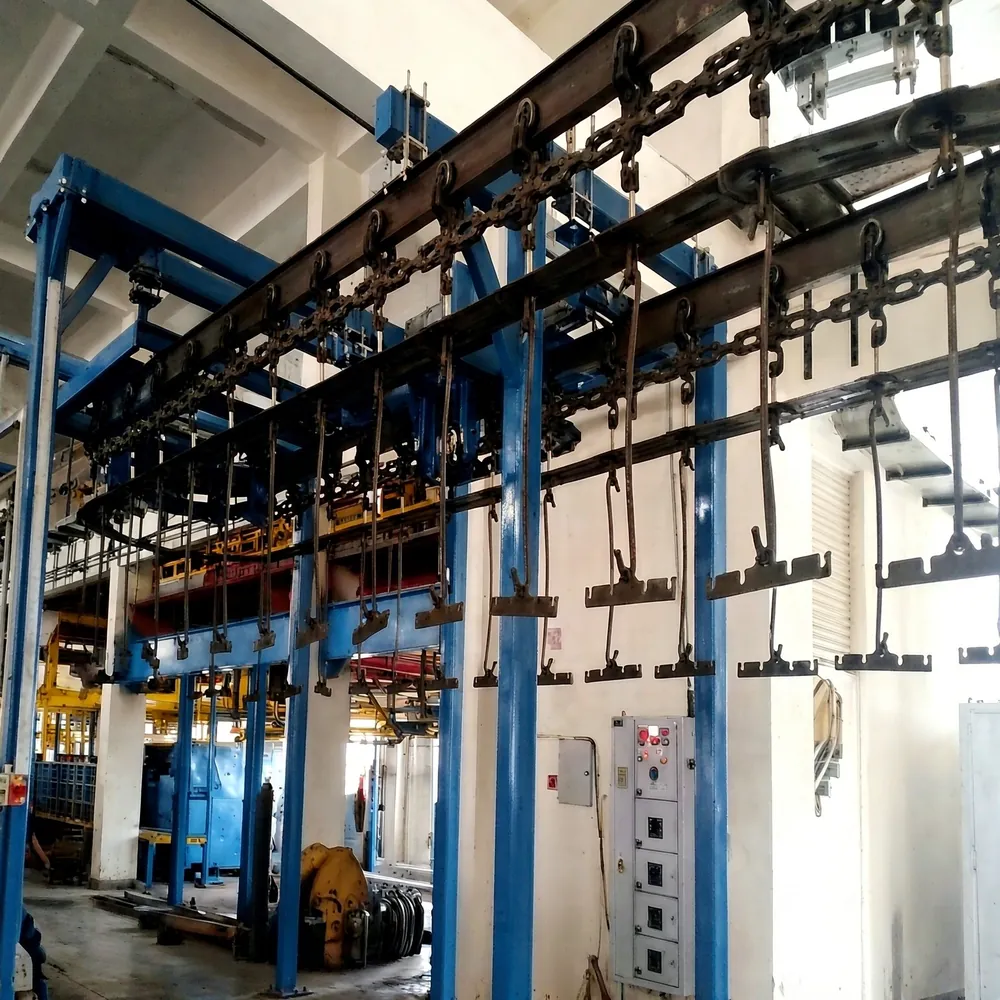
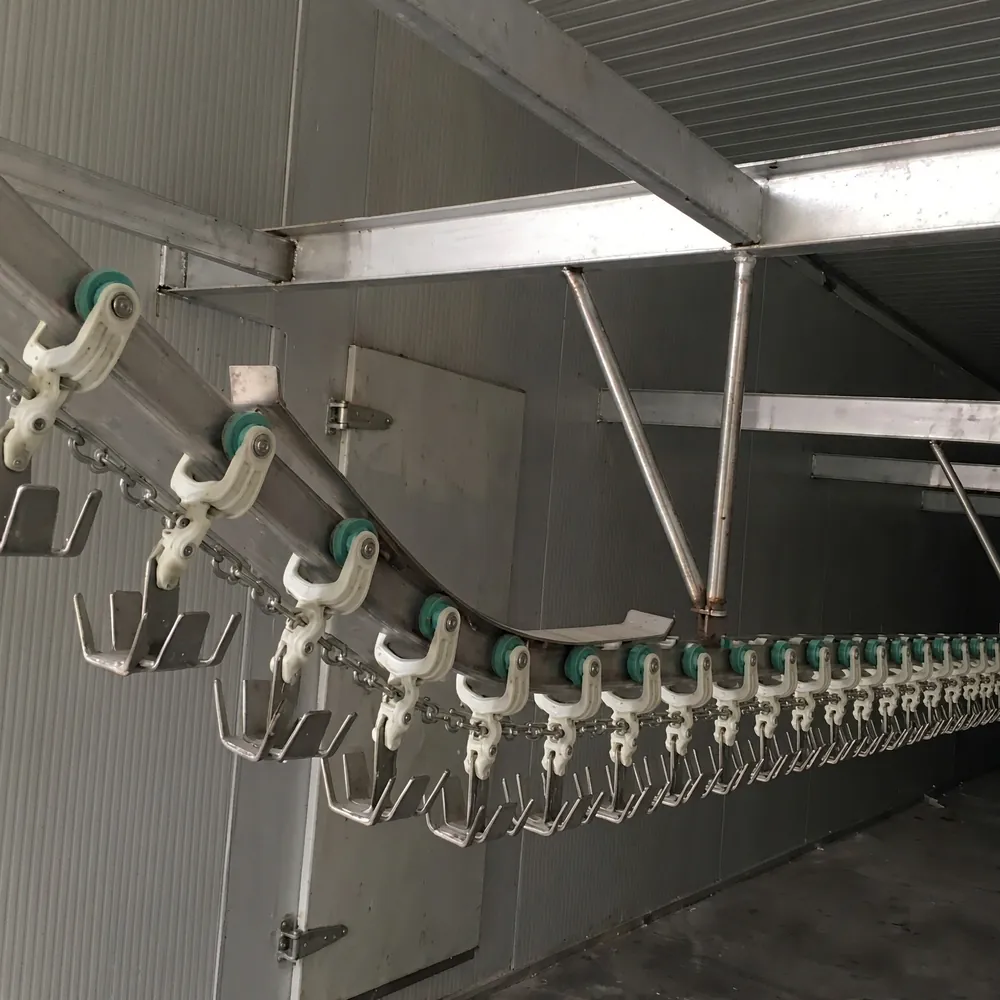
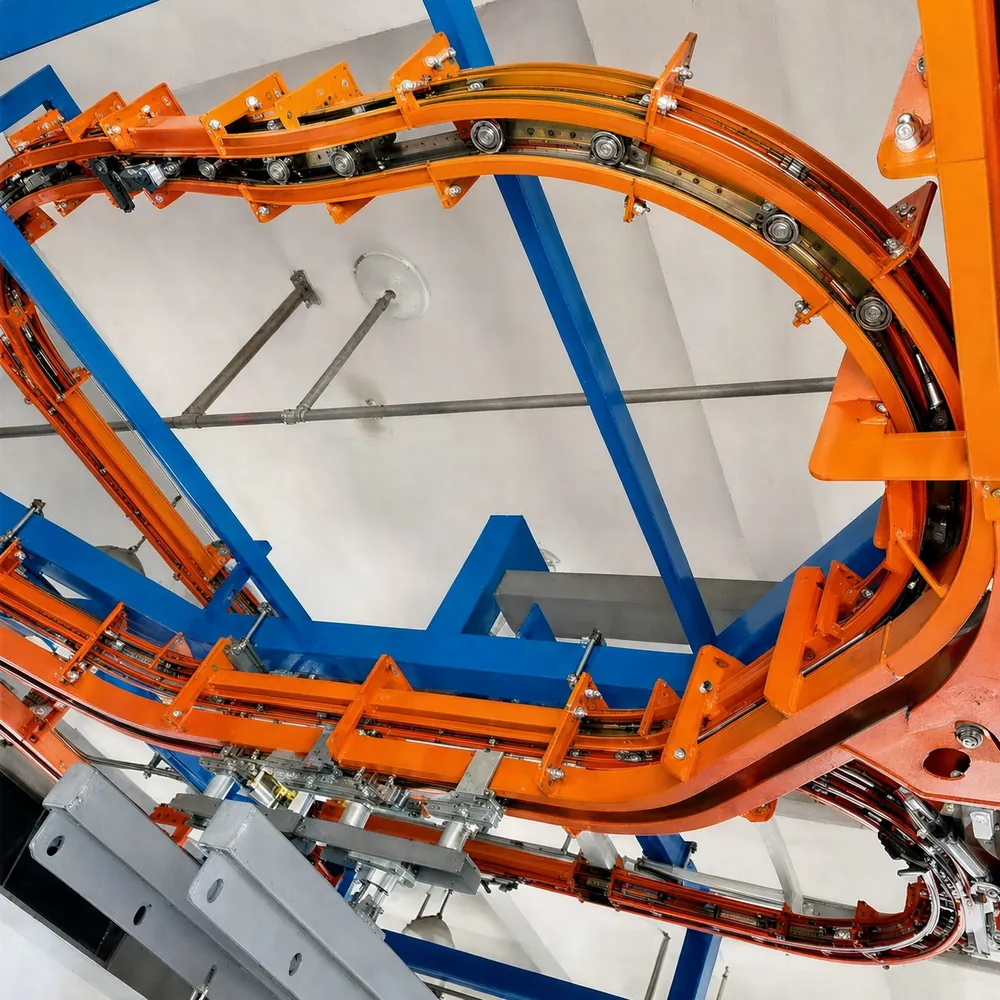
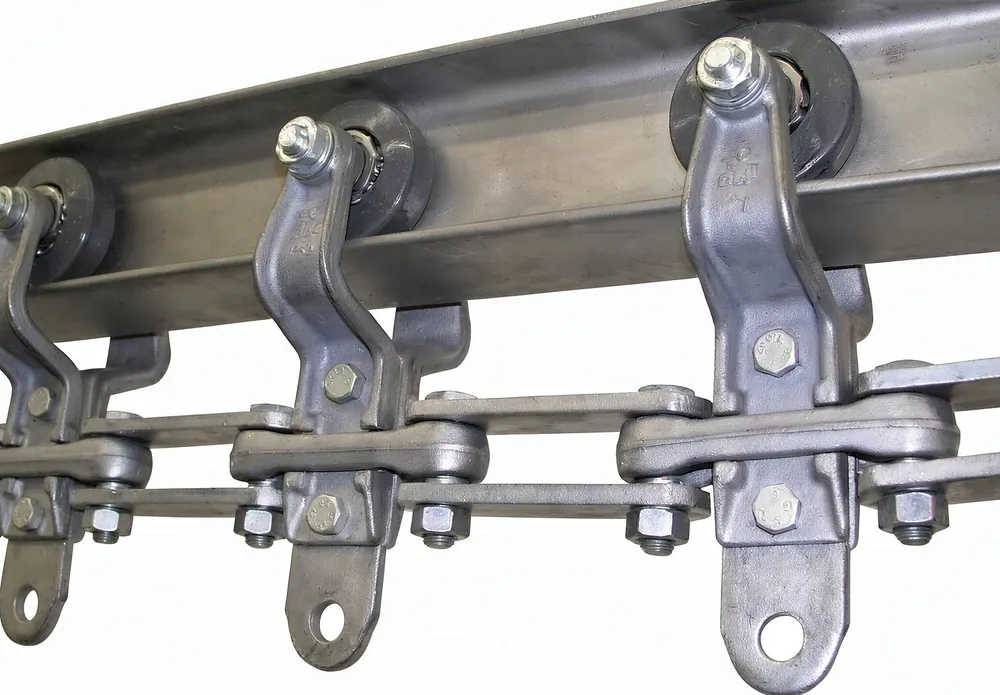
Rivetless chain is a drop-forged conveyor chain made of centre links, side links and pins. It is called rivetless because the pins are held by their shape rather than riveted, so the chain can be assembled and taken apart without special tools.
Chain sizes
| Designation | Nominal pitch | Typical use |
|---|---|---|
| X-348 | 3 in | Light to medium loads; general finishing and assembly |
| X-458 | 4 in | Medium to heavy loads; longer lines |
| X-678 | 6 in | Heavy loads; automotive and heavy industry |
Load ratings depend on the manufacturer, trolley spacing and duty; always use the supplier's data.
How it works with trolleys
Trolley brackets clamp to the centre links at regular intervals. Each bracket carries two wheels that run on the track flanges. Attachments on the brackets carry the hangers. On power and free conveyors, pusher dogs are attached to the chain instead of hangers.
Advantages of rivetless chain
- Flexible in horizontal and vertical curves
- Simple assembly and repair without tools
- Forged parts with high strength for their weight
- Widely available, with interchangeable parts across suppliers of the same standard
Elongation and replacement
Pins and links wear at their contact points, so the chain becomes longer over time. Measure a defined number of pitches with a tape or gauge and compare with the nominal length:
Elongation (%) = (measured length − nominal length) ÷ nominal length × 100
Example: 10 pitches of X-348 should measure 30 in (762 mm). A measurement of 777 mm means 15 mm or about 2% elongation. Replace the chain at the limit given by the chain manufacturer; running worn chain damages drive dogs, sprockets and take-ups.
Questions to ask your supplier
- Which chain class is proposed, and what is its rated working load?
- What trolley spacing is used, and why?
- What elongation limit should trigger replacement?
- Are chain and trolleys interchangeable with standard parts?
See chain lubrication, power and free components and overhead chain conveyors.
Common mistakes to avoid
- Mixing chain from different standards on one conveyor
- Measuring elongation only once it causes problems
- Over-lubricating so dirt sticks to joints
- Replacing short sections of very worn chain next to new chain
Rivetless chain terms
| Term | Meaning |
|---|---|
| Centre link | Solid link that pins pass through |
| Side links | Pair of links joining centre links |
| Pin | T-head pin that holds links together without rivets |
| Pitch | Distance between pin centres |
| Trolley bracket | Attachment carrying wheels and hanger |