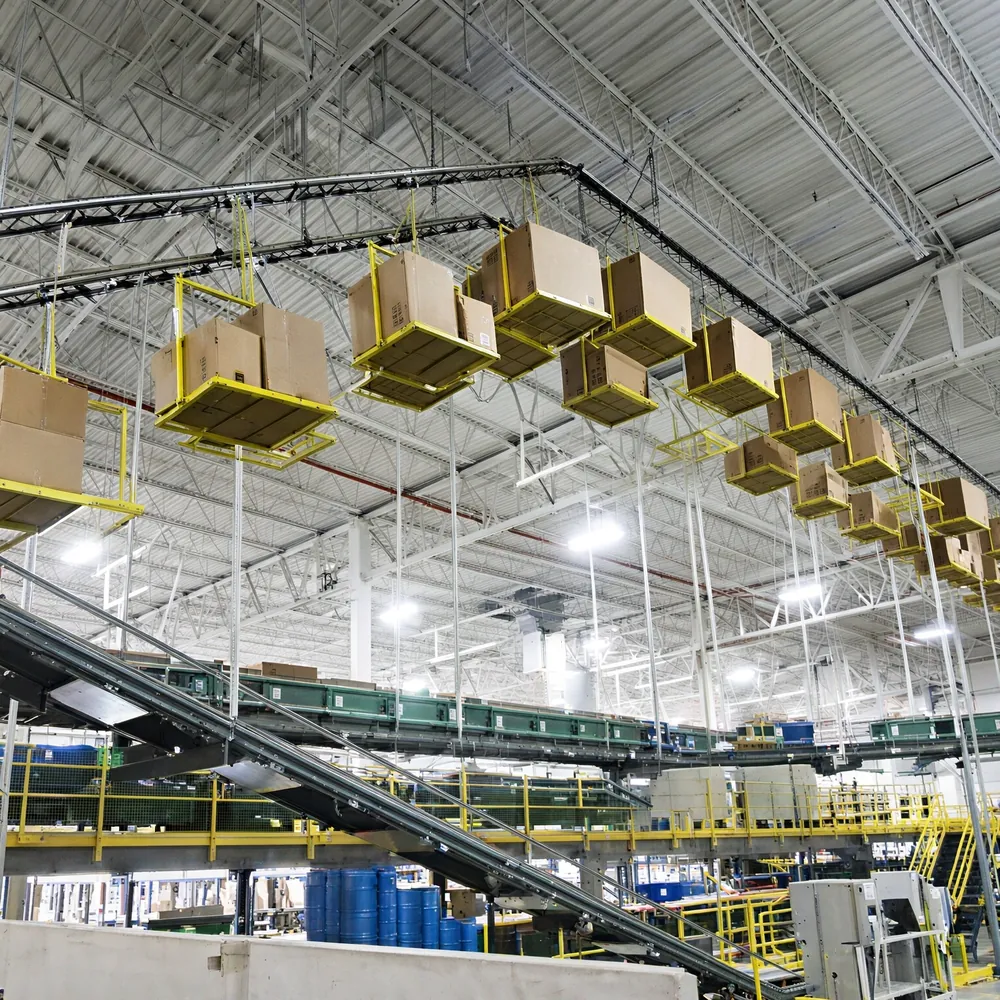
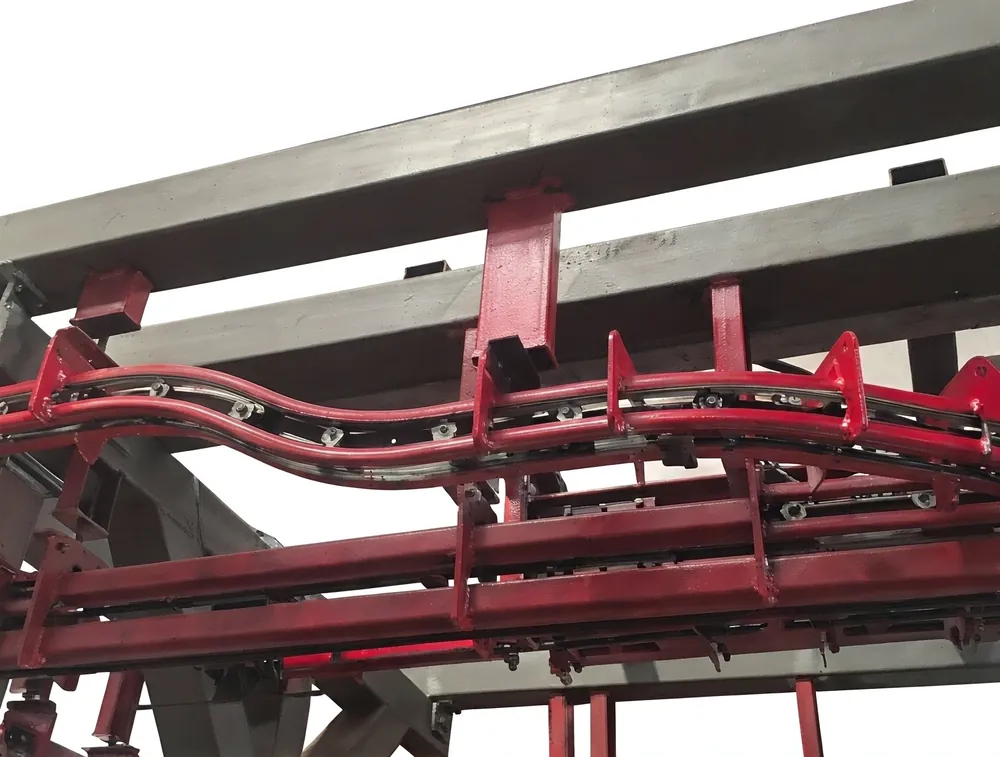
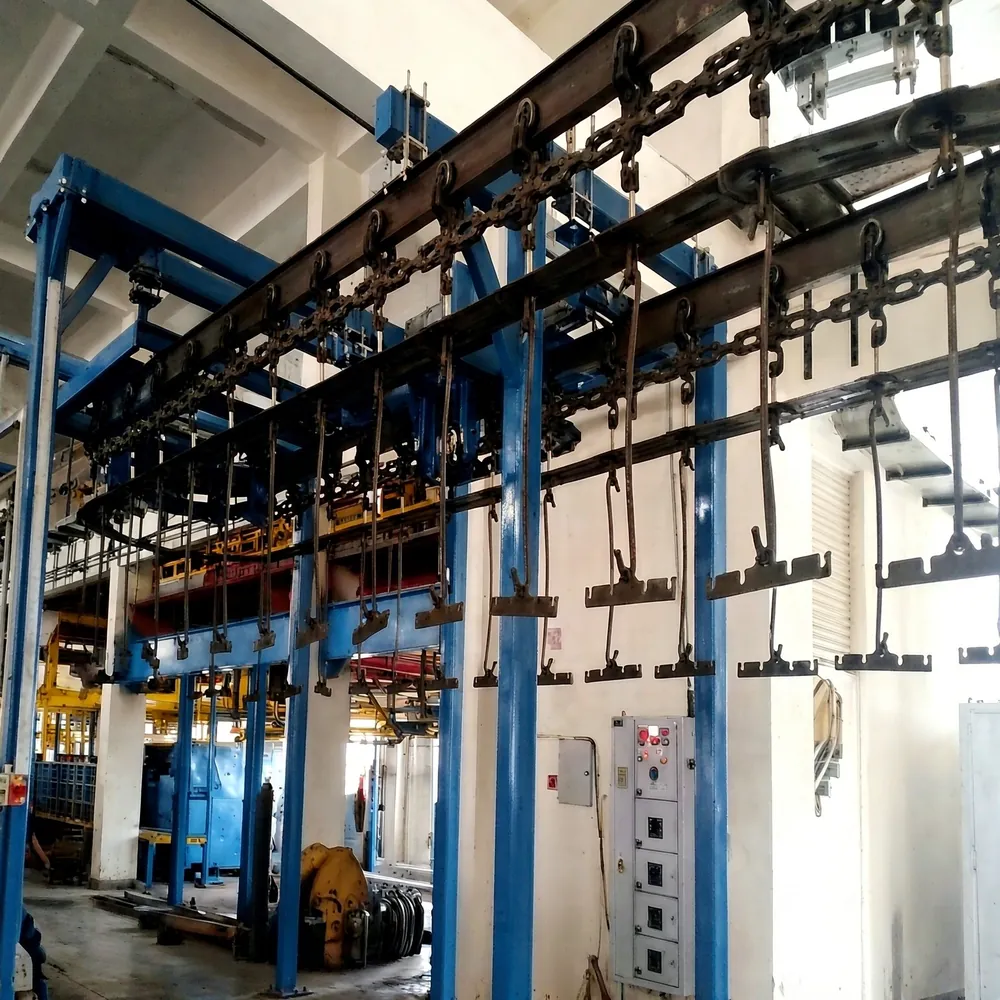
Light duty overhead conveyors use slim aluminium or steel rails and small trolleys to move loads of a few kilograms. They are common in garment and textile production, electronics, kitting, laundries and order picking.
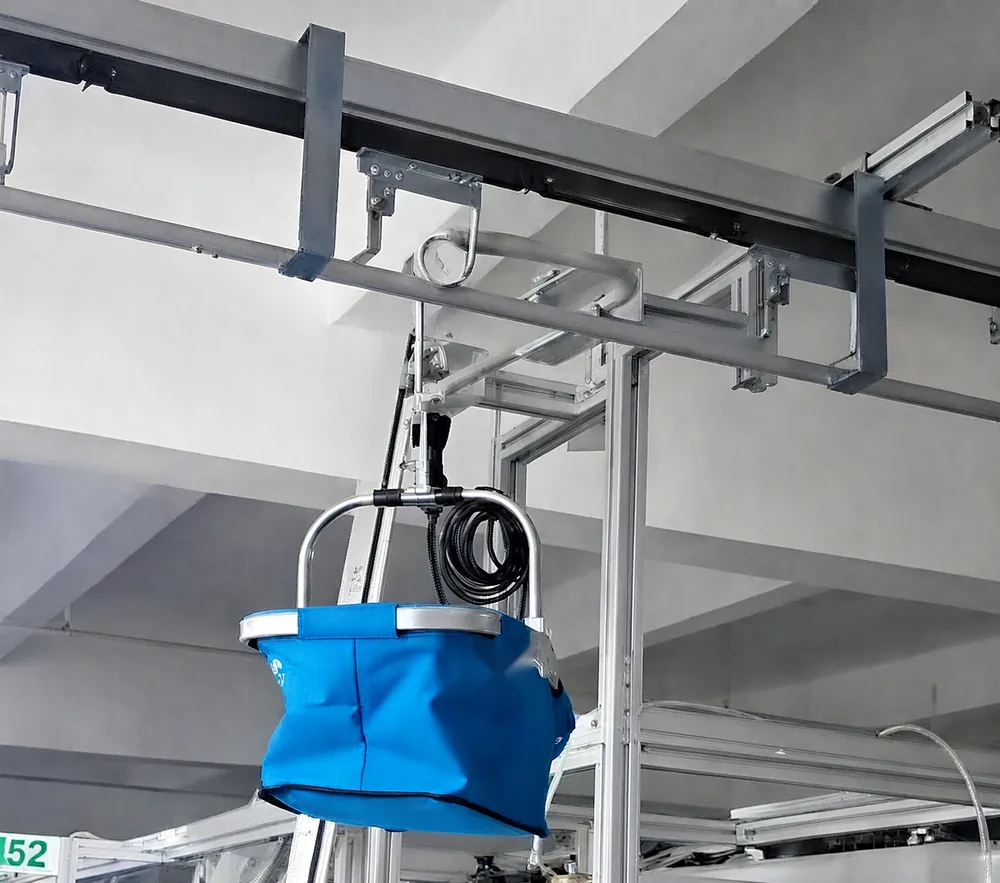
Typical applications
| Industry | What travels overhead |
|---|---|
| Garments and textiles | Bundles or single garments between sewing stations |
| Electronics | Totes and baskets with components |
| Kitting and order picking | Baskets that collect items for one order |
| Laundries | Garments on hangers, sorted by customer |
| Small parts finishing | Light parts through washing or coating |
Hand-push or powered?
| Option | Strengths | Limits |
|---|---|---|
| Hand-push (gravity or manual) | Low cost, simple, silent | Operator effort; no automatic routing |
| Chain-driven | Continuous flow | All carriers move together |
| Powered and controlled | Automatic routing, buffering and sorting | Higher cost and controls |
Design points
- Rail profile and trolley rating matched to the heaviest basket
- Station heights that suit seated or standing work
- Switches and buffer lanes where work must queue or be sorted
- Identification on each carrier for tracking
- Support from the ceiling or light freestanding frames
Worked example: sewing line buffer
A garment line has 20 sewing stations with a takt of 60 seconds. Operations vary between 45 and 75 seconds, so small buffers of 3 to 5 carriers before slower stations keep operators busy without overloading the line. A powered system with sorting logic sends each bundle to the next free operator for its operation.
Questions to ask your supplier
- What is the maximum load per carrier?
- Hand-push, chain-driven or powered with routing?
- How are carriers identified and tracked?
- Can the layout be extended as the workshop grows?
For heavier loads, read about EMS conveyors and warehouse overhead conveyors.
Common mistakes to avoid
- Choosing hand-push systems for lines that need routing and tracking
- Overloading light rails with heavier baskets added later
- No buffers before slower stations
- Ceiling supports not checked for the added load
Light duty conveyor checklist
| Topic | What to define |
|---|---|
| Load | Maximum weight per carrier, including basket |
| Flow | Stations, buffers and sorting points |
| Drive | Hand-push, chain-driven or powered |
| Tracking | Carrier IDs and software |
| Support | Ceiling hangers or freestanding frames |