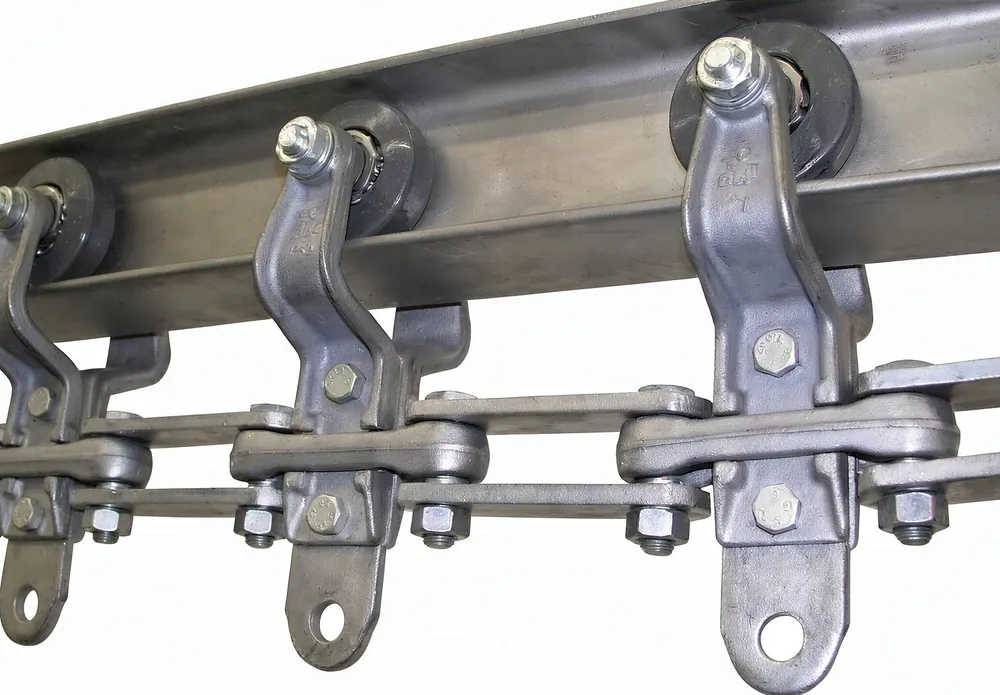
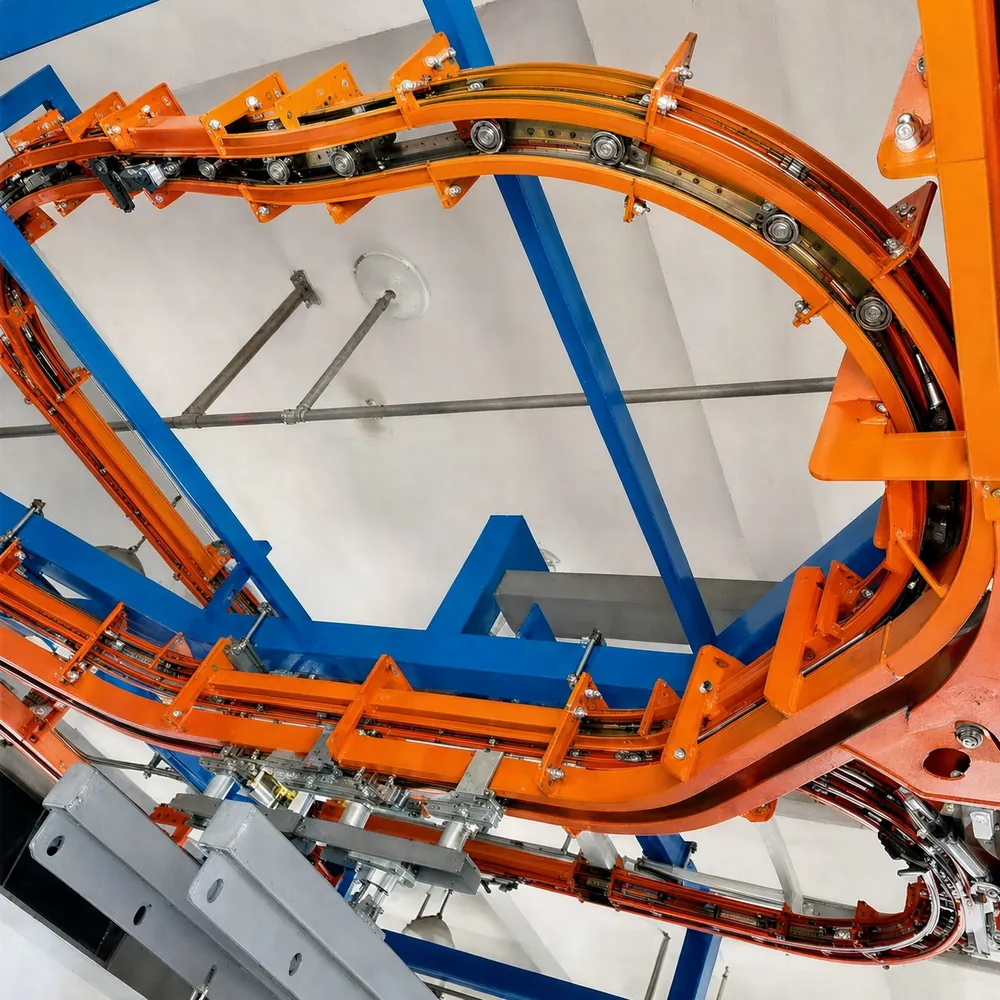
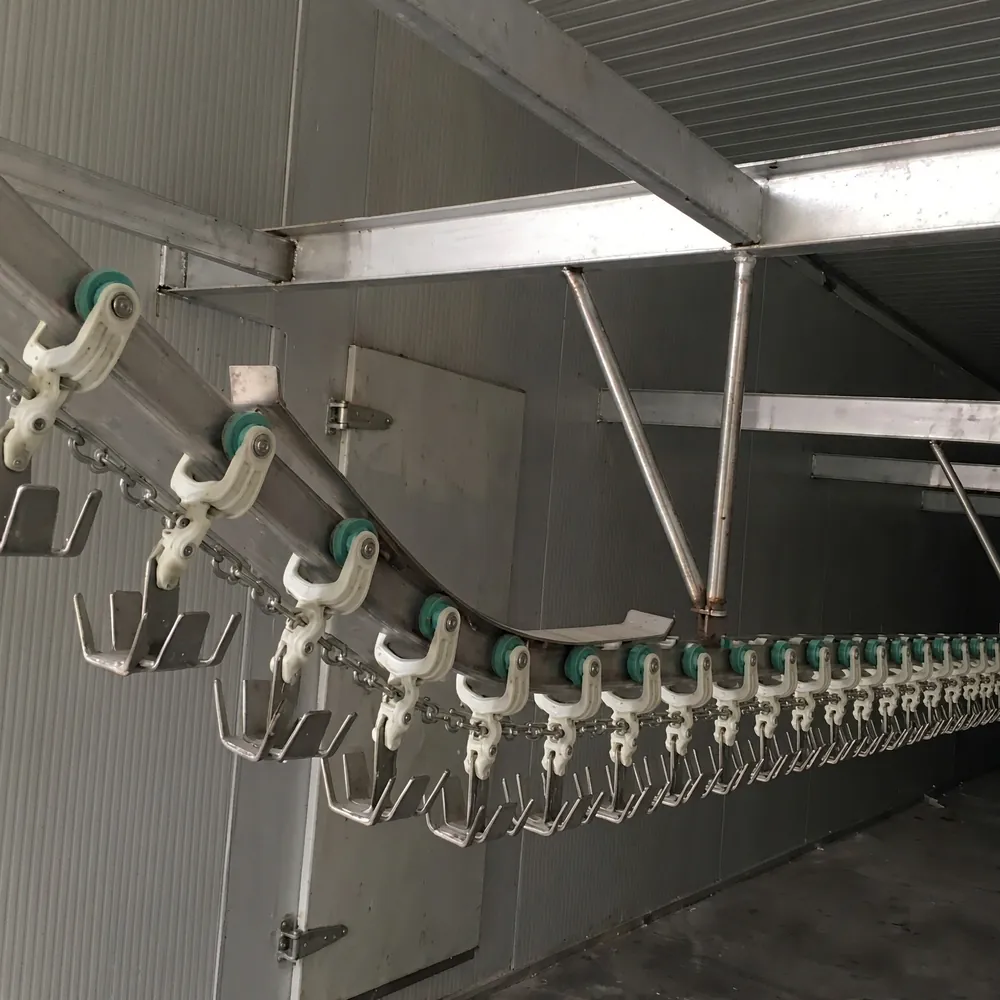
In foundries and forges, overhead conveyors carry castings and forgings through cooling, shot blasting, fettling, inspection and painting. The environment adds heat, dust and abrasion to the usual design questions.
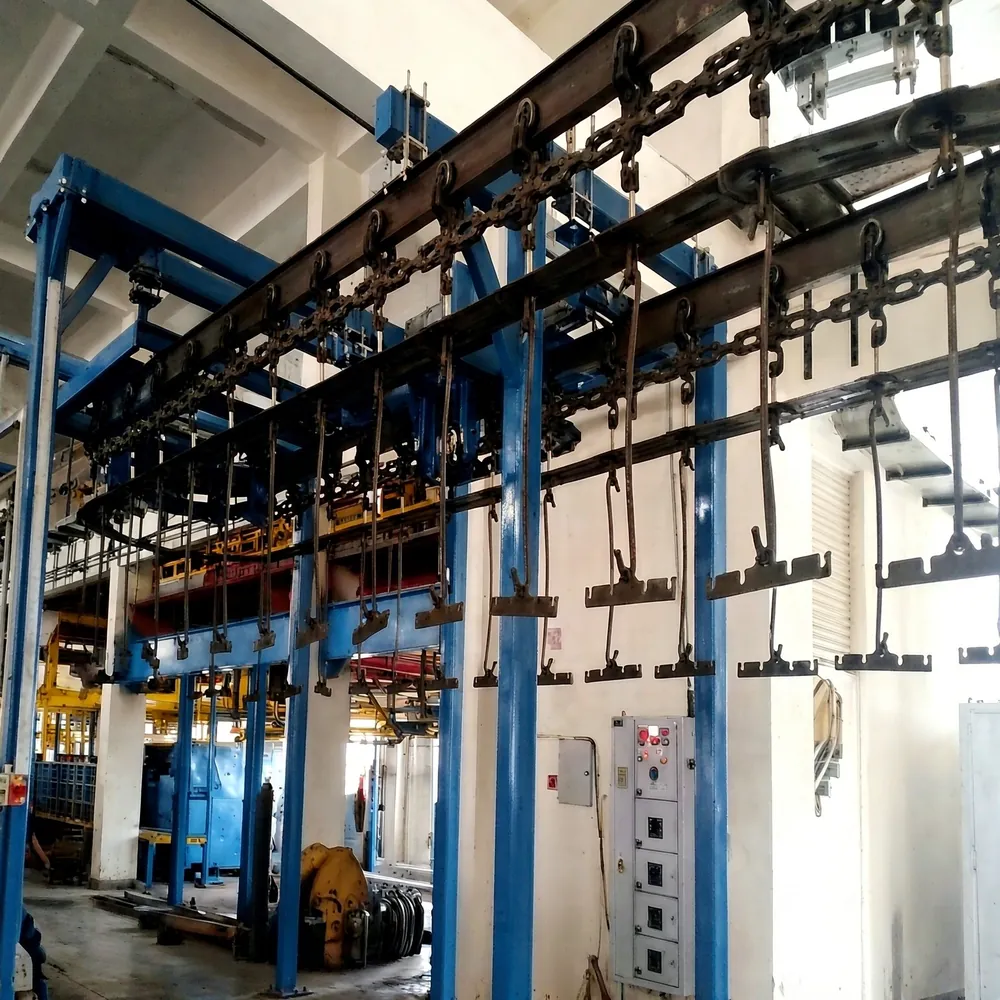
Typical uses
| Process | Conveyor role |
|---|---|
| Casting cooling | Long loops give hot castings time to cool before handling |
| Shot blasting | Hook conveyors carry parts through blast cabinets |
| Fettling and inspection | Bring parts to stations at working height |
| Painting and coating | Carry parts through priming and drying |
Designing for harsh conditions
- Sealed or shielded bearings against dust and abrasive
- Heat-resistant lubricants near hot parts
- Track and chain protected where they pass blast cabinets
- Heavy, simple hooks that are easy to repair or replace
- Extra margin in chain class and drive size for heavy loads
- Guarding against falling parts over walkways
Shot blasting with hook conveyors
In hook-type blast machines, parts hang on hooks that enter the blast cabinet. Seals at the entry and exit keep abrasive inside, and the hooks themselves wear from the blasting. Rotating hooks expose all sides to the blast stream. Plan for regular hook replacement.
Worked example: cooling loop length
Castings need 40 minutes to cool before fettling. At a line speed of 3 m/min, the cooling section must be 3 × 40 = 120 m long. Folding the loop into several passes keeps the floor area compact.
Questions to ask your supplier
- How are bearings and chain protected from dust?
- What chain class and margin are proposed for our loads?
- How are hooks attached, and how easily are they replaced?
- How is the conveyor protected at the blast machine?
Related: heavy duty overhead conveyors and overhead conveyor safety.
Common mistakes to avoid
- Standard bearings in dusty areas without seals
- Hooks too light for repeated impacts and blasting
- No guarding where heavy castings pass over walkways
- Cooling loops too short for the real cooling time
Foundry conveyor checklist
| Topic | What to define |
|---|---|
| Parts | Weight, temperature and shape |
| Environment | Dust, abrasive and heat at each zone |
| Hooks | Design, material and replacement method |
| Chain | Class and margin for heavy loads |
| Safety | Guarding and safe zones |