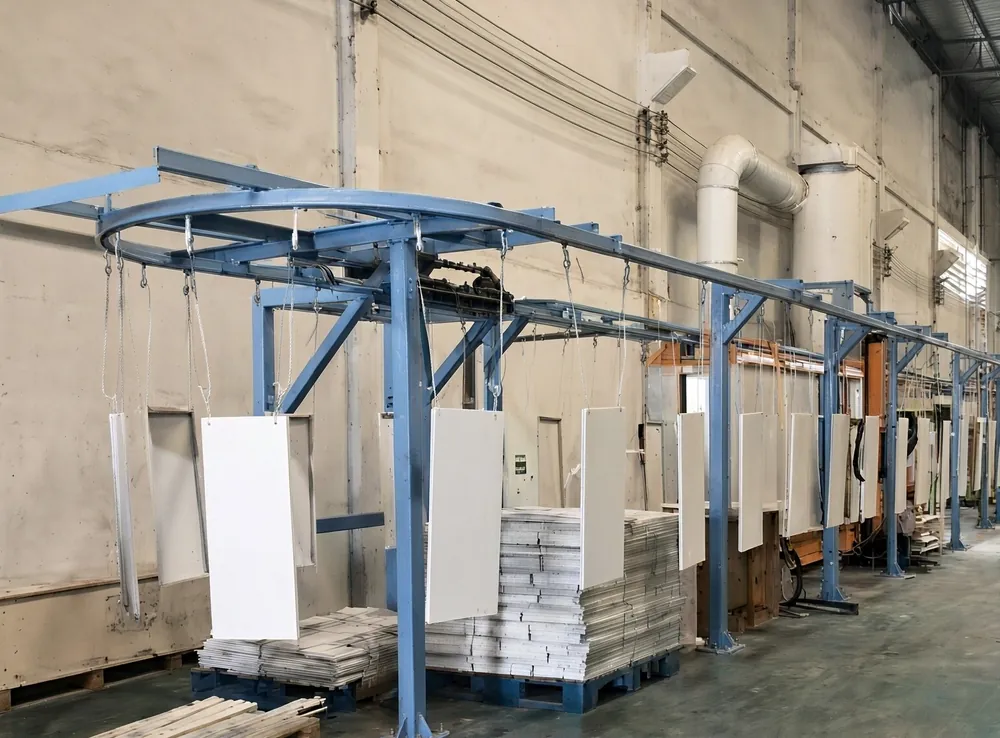
Electrostatic spray guns charge the powder particles, and the grounded part attracts them. If the part is not well grounded, coverage drops, powder wraps poorly around edges, and more powder ends up in the recovery system or on the floor.
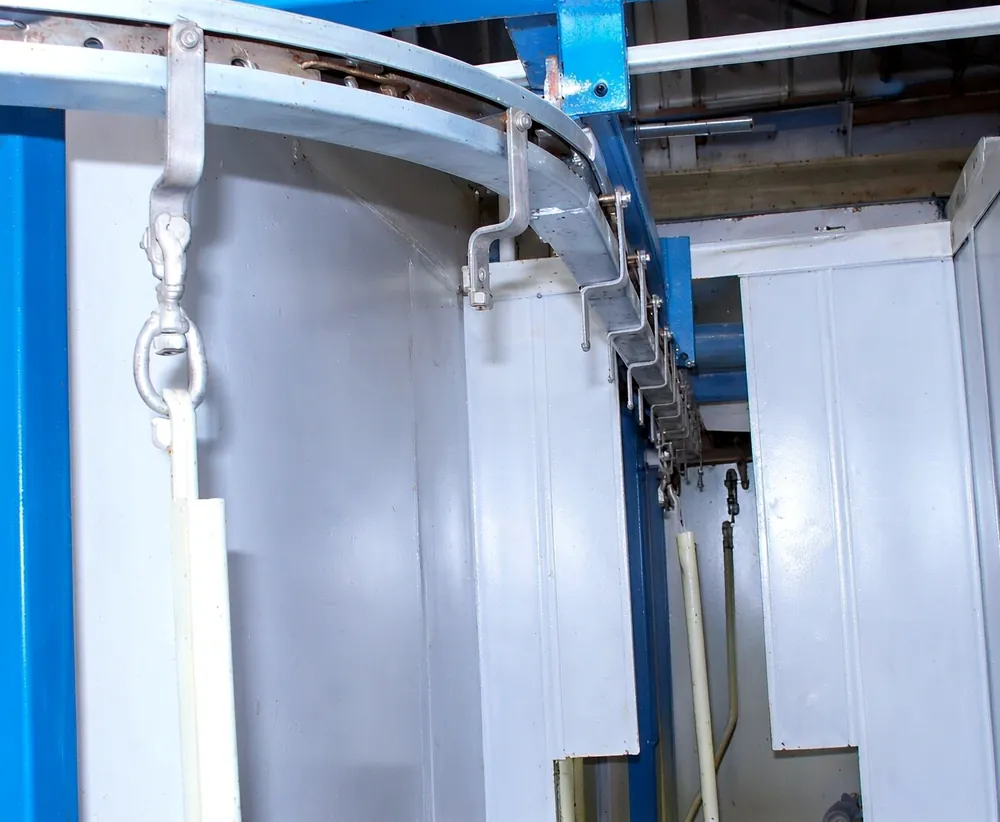
The grounding path
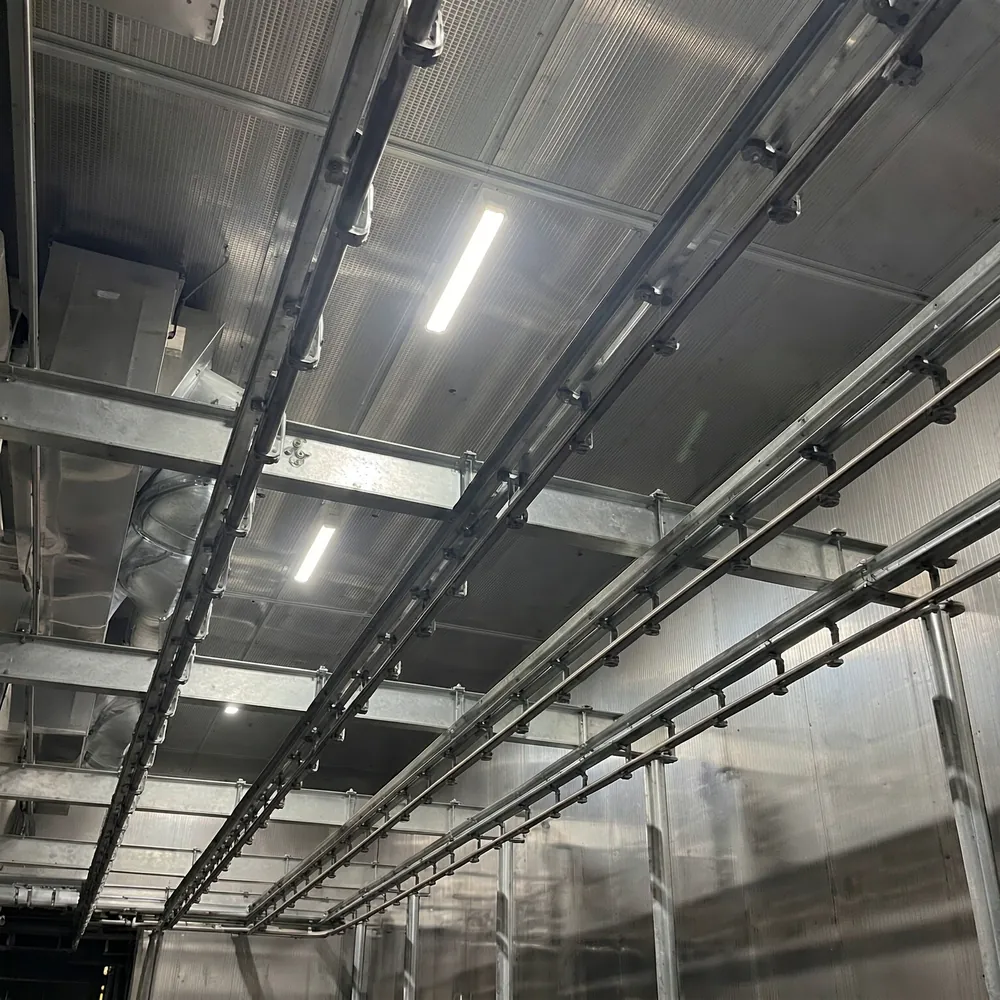
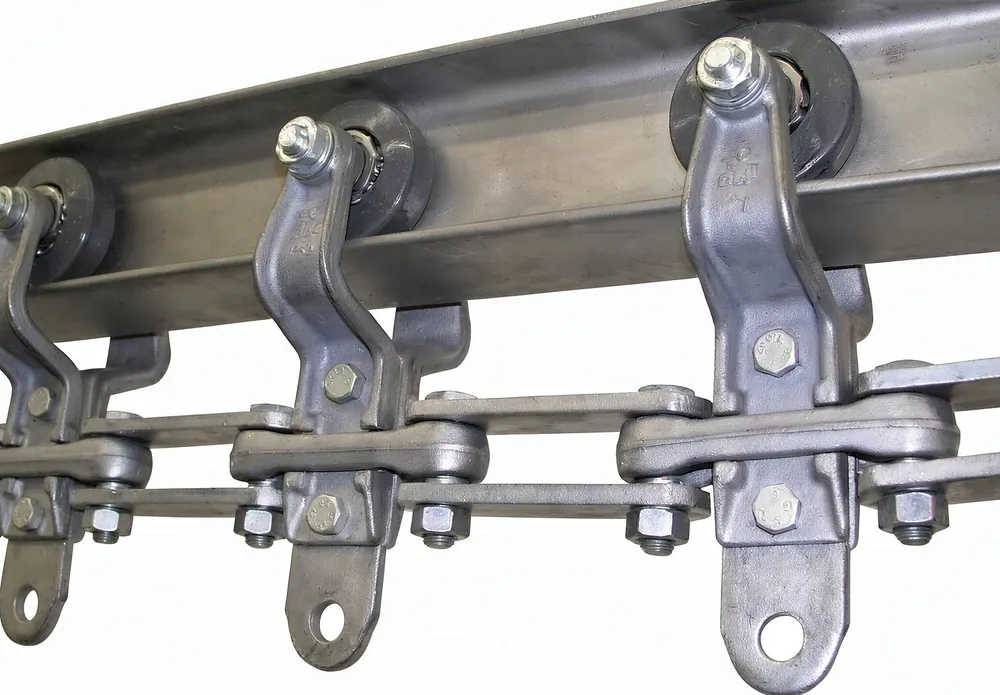
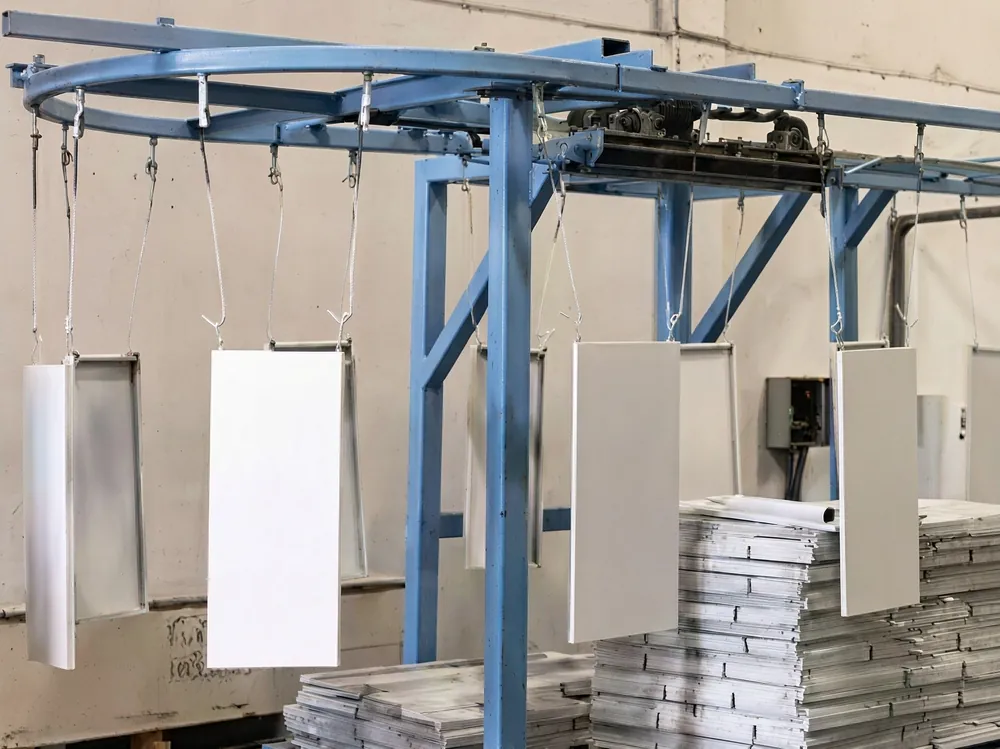
On a conveyor line, the current flows from the part through the hook, the hanger, the trolley wheels and chain, into the track and support steel, and from there to the building ground. Every contact point in this chain adds resistance.
| Point | Problem | Remedy |
|---|---|---|
| Hook to part | Cured powder insulates the hook | Strip hooks regularly; small contact points |
| Hook to hanger | Coating on hanger bars | Clean or protect hanger contact areas |
| Trolley to track | Dirt, grease, worn wheels | Keep contact paths clean |
| Track to ground | Missing or loose ground strap | Dedicated ground connections, checked regularly |
Measuring
A common guideline is a resistance to ground of 1 megohm or less, measured between the part and a known ground. Measure with a suitable insulation resistance meter, at several carriers, and log the results. A trend of rising values shows when hook stripping is overdue.
Symptoms of poor grounding
- Thin coverage in corners and on edges
- Higher powder consumption for the same film thickness
- Back-ionisation: orange-peel and starring defects
- Powder building up on the booth walls instead of parts
Safety note
Ungrounded conductive objects in a powder booth can hold a charge and discharge as a spark. Good grounding of parts, conveyor and booth is also part of fire and explosion protection; follow the booth manufacturer's instructions and local regulations.
Questions to ask your supplier
- How is the conveyor track grounded, and where?
- Which hook design gives a defined contact point?
- What stripping routine do you recommend for our line?
Related: powder coating hooks and racks and spray booth conveyors.
Common mistakes to avoid
- Measuring grounding only when coating problems appear
- Painting over ground strap contact points
- Large flat hook surfaces that collect cured powder
- Skipping hook stripping to save time
Grounding check routine (example)
| Interval | Task |
|---|---|
| Each shift | Visual check of hooks and contact points |
| Weekly | Measure part-to-ground resistance at several carriers |
| Monthly | Check track and booth ground connections |
| As needed | Strip hooks when resistance rises |
Adapt to your line, powder and booth manufacturer's recommendations.