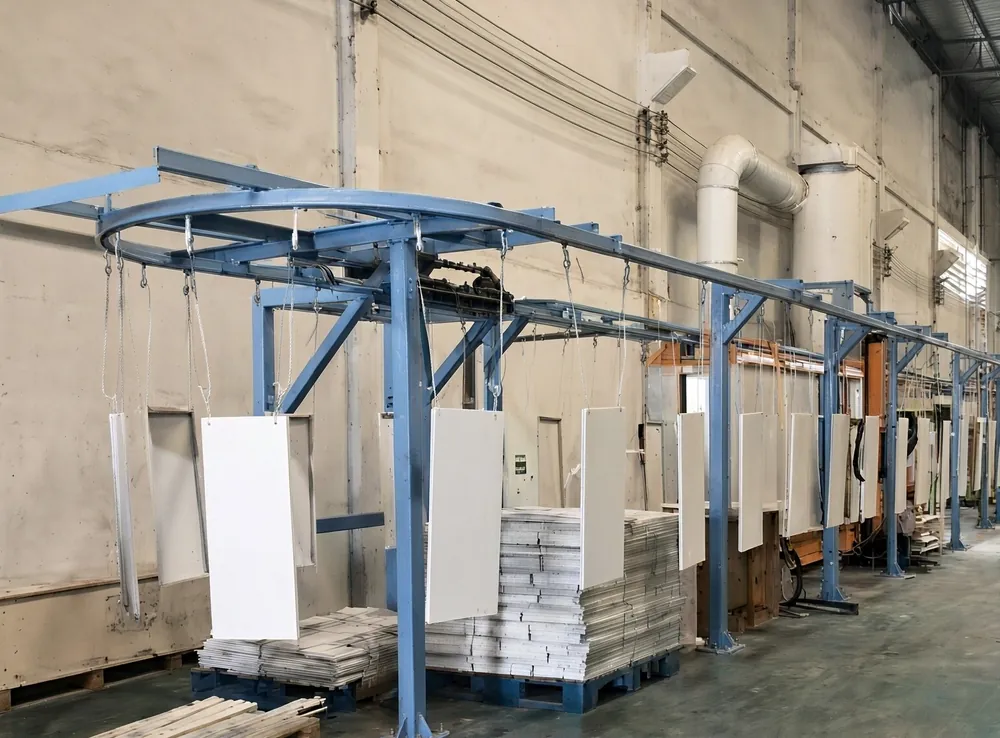
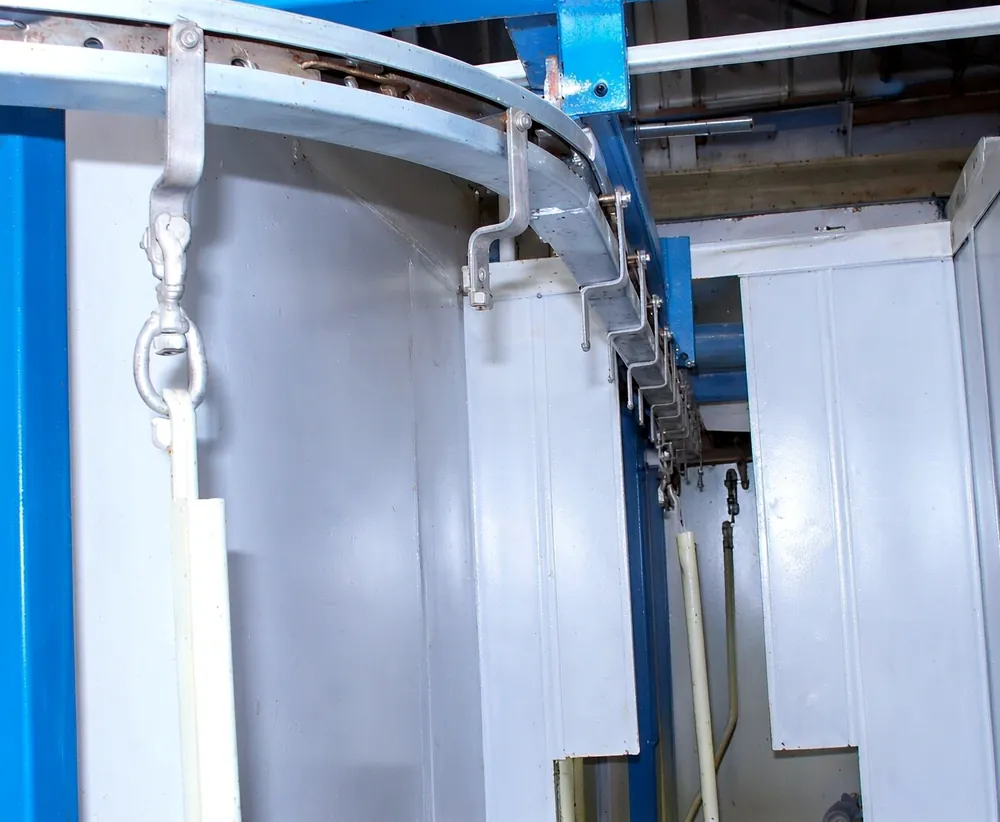
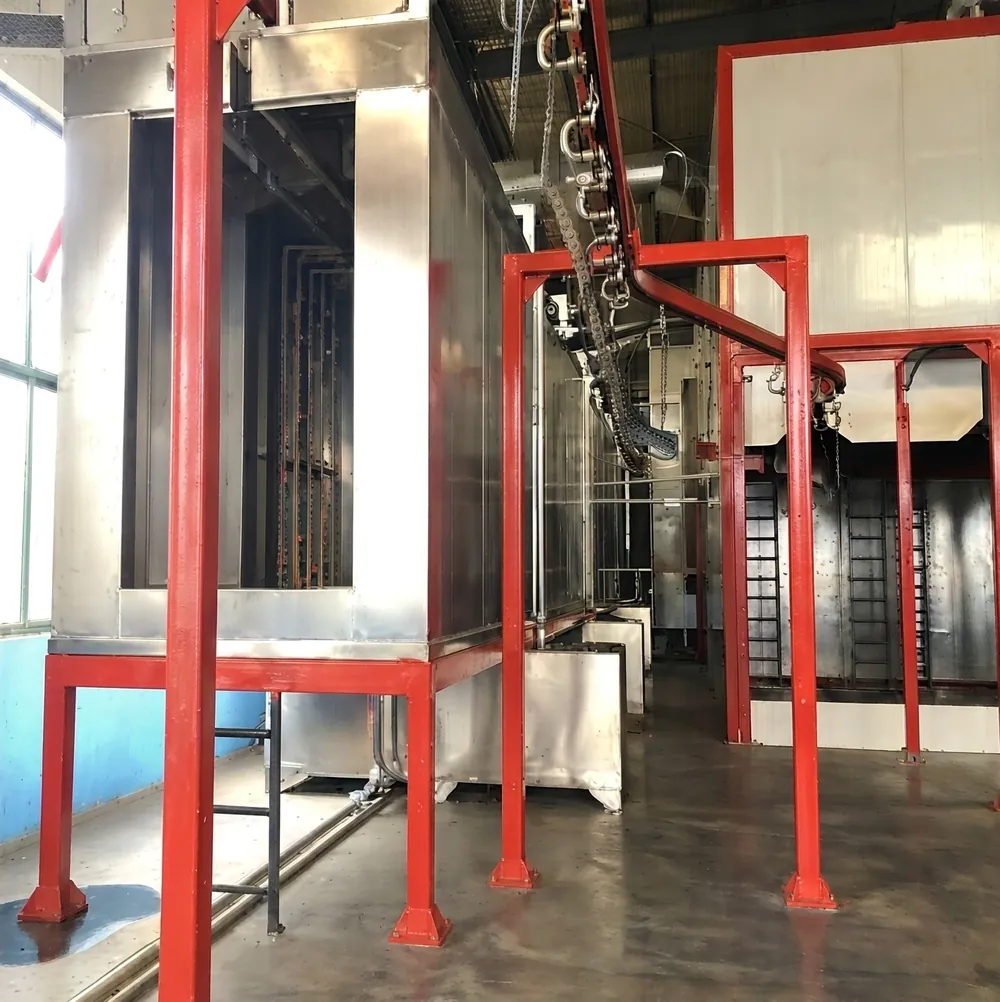
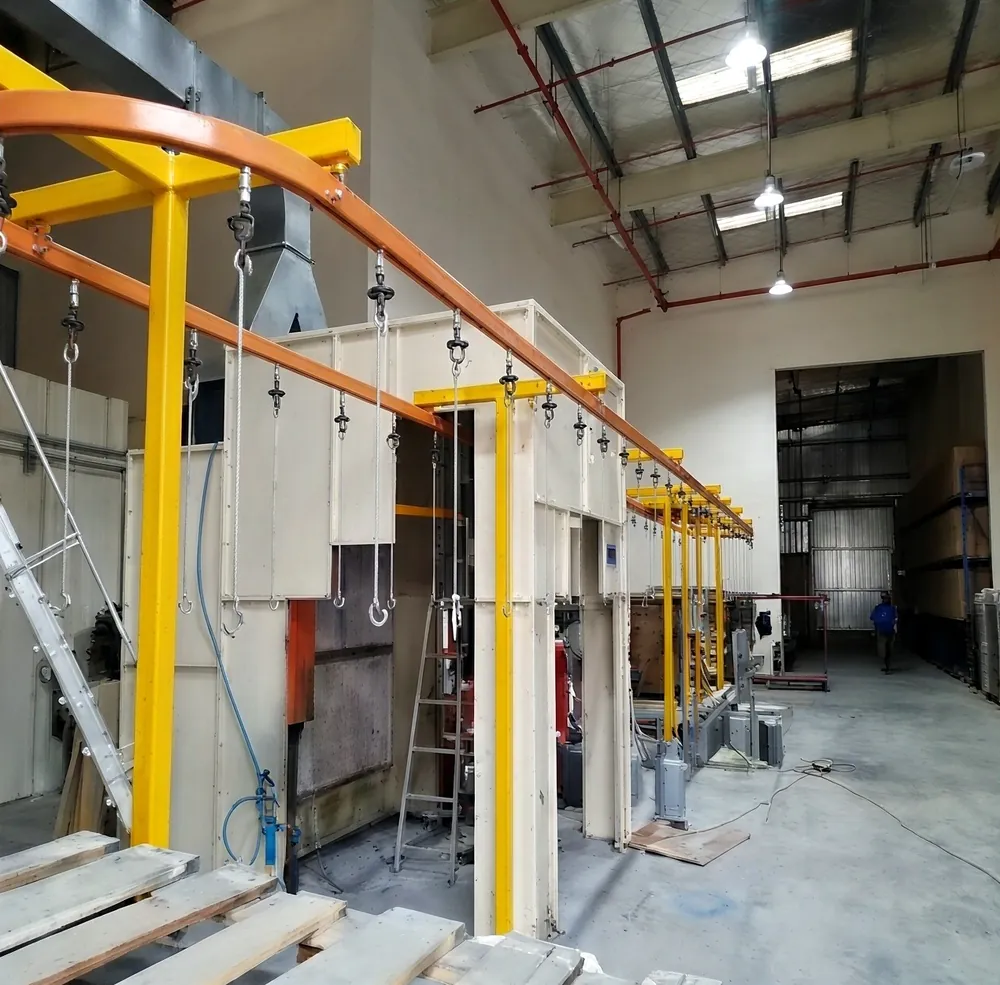
On a powder coating line, the conveyor speed is often fixed by the booth and the oven. The fastest way to coat more parts per hour is usually to hang more parts per metre. That is the job of hooks, racks and load bars.
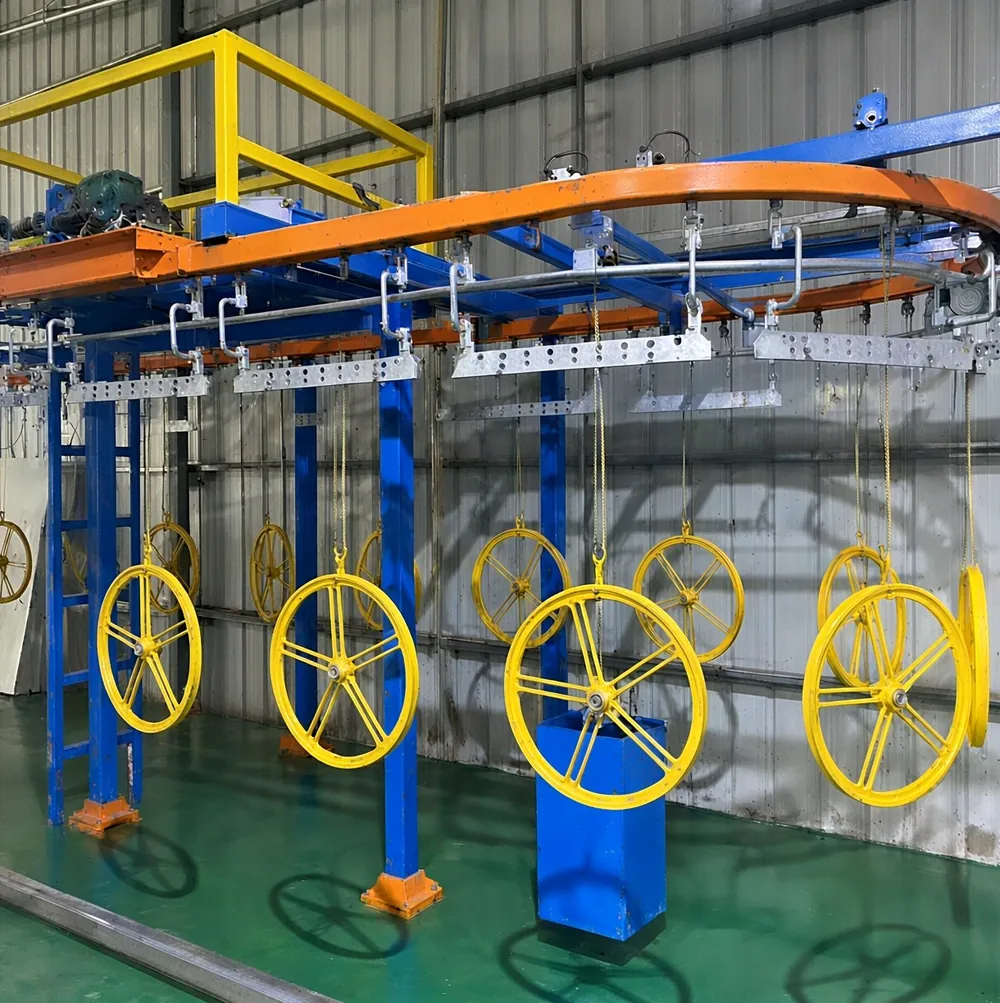
Common hanging methods
| Type | Use |
|---|---|
| S-hooks and J-hooks | Single parts with a hole or edge to hang from |
| Load bars with hook holes | Several parts per carrier; hook positions adjustable |
| Racks and trees | Many small parts on one frame |
| Rotating hooks | Turn parts at the booth for all-round coverage |
| Custom fixtures | Large or complex parts, locating on non-visible surfaces |
Hanging density
Parts per hour = line speed (m/min) × 60 × parts per metre
Example: at 1.5 m/min with 2 parts per metre, a line coats 180 parts per hour. A rack that holds 3 parts per metre at the same speed coats 270 parts per hour, with no change to booth or oven. Check that the guns still reach every surface and that parts do not shield each other.
Design rules for hooks and racks
- Contact on hidden surfaces, never on visible faces
- Small, defined contact points for good grounding
- Shapes that shed powder and are easy to strip
- Standard hooks across products to simplify stock
- Strength for the part weight plus cured coating build-up
Stripping and cleaning
Cured powder builds up with every pass and insulates the hook. Burn-off ovens, chemical stripping and abrasive blasting are common cleaning methods. Plan a hook rotation so clean hooks are always available. Grounding is covered in powder coating grounding.
Questions to ask your supplier
- How many parts per metre can the proposed racks hold?
- Where do hooks contact the part, and is that surface hidden?
- How are hooks stripped, and how often?
- Can racks be changed quickly between products?
See also carrier and hanger design and powder coating conveyor systems.
Common mistakes to avoid
- Hooks that touch visible surfaces and leave marks
- Overloaded racks where parts shield each other from the guns
- No spare set of clean hooks, so stripping is skipped
- A different hook for every product instead of a few standard types
Hook and rack checklist
| Question | Why it matters |
|---|---|
| Where does the hook touch the part? | Marks and grounding |
| How many parts per metre? | Line output |
| Can guns reach all surfaces? | Coating quality |
| How is the hook stripped? | Grounding and hook life |
| How fast can racks be changed? | Changeover time |