
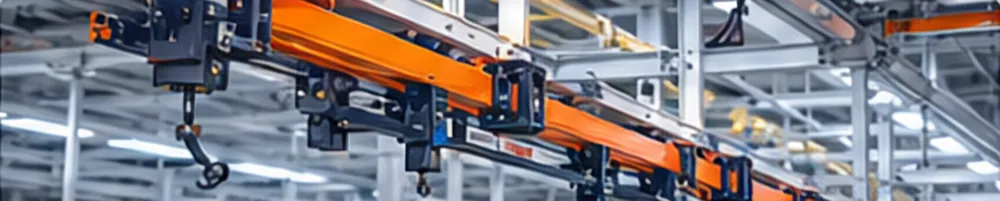
Overhead conveyors are reliable when they are maintained on a schedule. Intervals depend on operating hours, loads and environment, so always follow the manufacturer's manual for your system.
Daily checks
- Walk the line and listen for unusual noise, squeaks or knocking
- Check for loose parts, damaged carriers or hanging debris
- Confirm emergency stops and safety gates work
- Review alarms and fault history on the HMI
Weekly checks
- Power and free: check chain lubrication and lubricator function
- Power and free: inspect dogs, stops and trolley wheels
- EMS: inspect drive wheels and guide rollers for wear
- Clean sensors, reflectors and identification readers
Monthly checks
- Power and free: measure chain elongation at marked sections
- Power and free: check take-up travel and drive unit condition
- EMS: inspect conductor rail and current collectors for wear and dirt
- Check switches and turntables for smooth movement and correct end positions
- Inspect lift stations: chains or belts, guides, brakes and safety catches
Annual checks
- Inspect structure, hangers and fasteners; re-tighten as required
- Check rail joints and track alignment
- Test all safety functions and document the results
- Review spare parts stock against wear observed during the year
- Back up PLC and HMI programs
When to replace the chain
Chain wear shows up as elongation. Measure a defined length of chain and compare it with the nominal length. Replace the chain when elongation reaches the limit given by the chain manufacturer, typically a few percent. Running a worn chain damages sprockets, drive dogs and track.
Keep a maintenance log
Record each check, measurement and repair. Trends in chain elongation, wheel wear or fault frequency show problems before they cause downtime.
Need spare parts or a service visit? See our service offering or contact us.