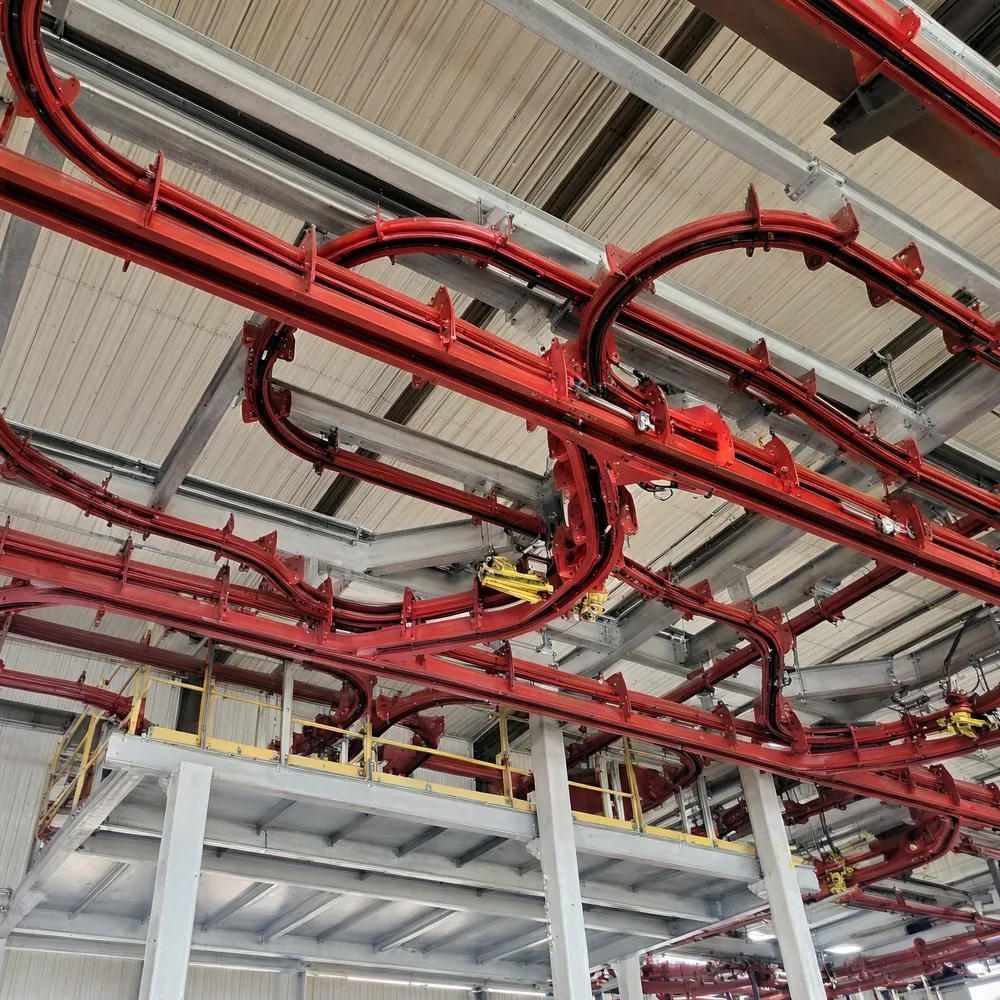
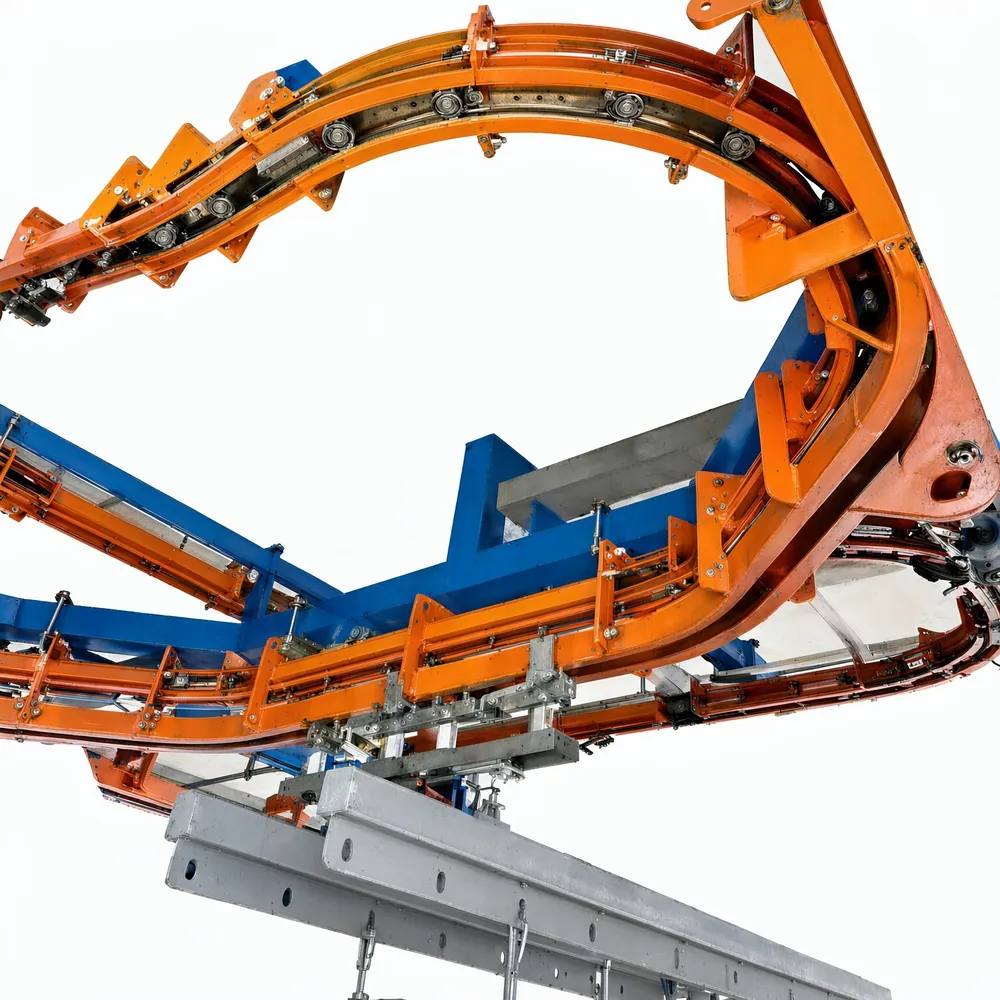
The support structure carries the track, the chain, the carriers and the products, and it takes the forces from drives and take-ups. It is often the largest steel item in an overhead conveyor project.
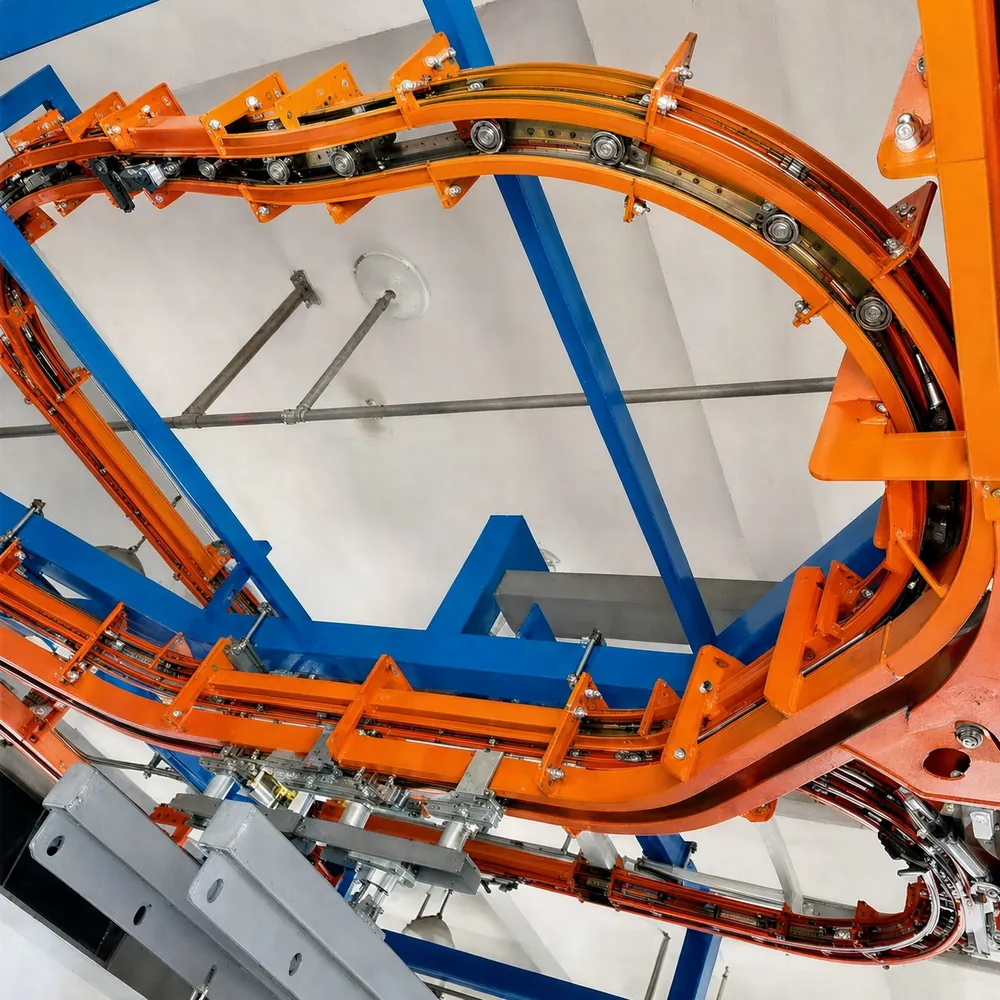
Roof-hung or freestanding?
| Option | When it fits | Watch out for |
|---|---|---|
| Hung from roof steel | Roof has spare capacity at the right points | Structural check needed; roof work at height |
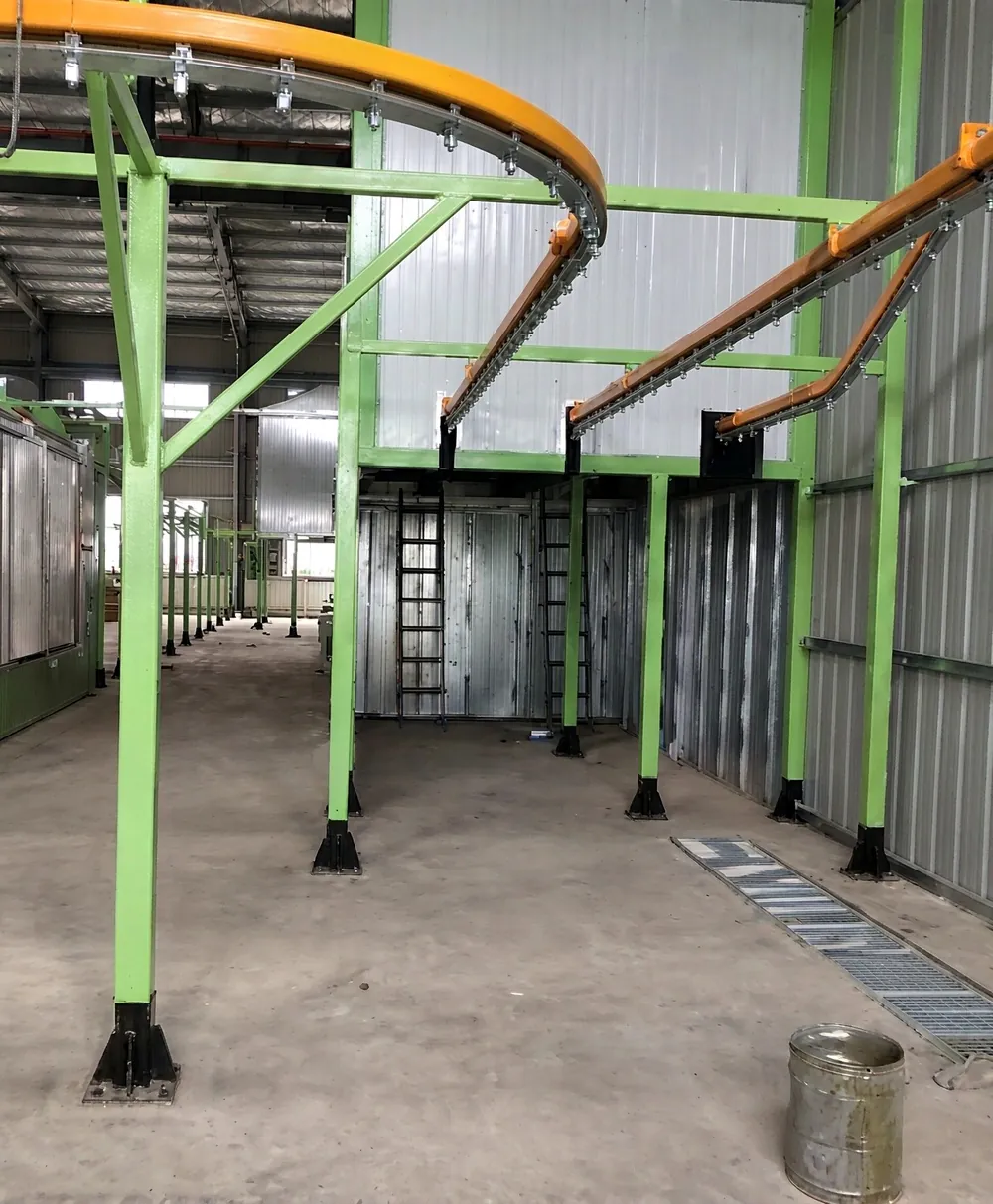
| Freestanding columns and beams | Roof capacity limited, or line runs through process enclosures | Uses floor space for columns; needs foundations or anchors |
| Mezzanine-mounted | Conveyor runs over or on a platform | Platform must carry conveyor loads |
| Combination | Long lines through different building areas | Interfaces between support types |
Loads to design for
- Dead load: track, chain, trolleys, empty carriers, support steel
- Live load: products on carriers, including accumulated zones where carriers bunch together
- Chain pull at drives, take-ups and curves
- Dynamic effects from starts, stops and carrier impacts at stops
- Maintenance loads on access platforms
- Local requirements such as seismic or wind loads where applicable
Accumulation zones deserve special attention: carriers stand close together there, so the load per metre is much higher than on the moving line.
Design points
| Topic | What to define |
|---|---|
| Hanger spacing | Set by track type and loads; closer at curves and switches |
| Deflection | Limited so track alignment and trolley running stay smooth |
| Bracing | Against chain pull and sway, especially at drives and take-ups |
| Anchoring | Base plates and anchors sized for column loads |
| Corrosion protection | Painting or galvanising matched to the environment |
| Interfaces | Clearances to ducts, sprinklers, cranes, doors |
Approvals and documentation
Support steel loads must be checked by a qualified structural engineer, and roof-hung designs need the building owner's approval. Ask the conveyor supplier for a load plan showing the force at every hanging point and column, so the building engineer can check them.
Installation tips
- Set out hanging points and column positions from the conveyor centreline
- Install and level the structure before hanging track
- Check elevations at curves, switches and stations
- Tighten and mark bolted connections; re-check after first runs
More in our overhead conveyor installation guide. HITREE designs the support structure with every power and free and EMS system.
Worked example: why buffers change the steel
On the moving line, carriers of 120 kg hang every 2 m, a load of about 60 kg per metre plus the conveyor's own weight. In a buffer lane, the same carriers queue at 1 m spacing, doubling the load per metre to about 120 kg. The support steel above the buffer must be designed for the accumulated load, not the moving-line load.
Questions to ask about conveyor support steel
- Who designs the support steel, and who checks the building structure?
- Is a load plan with forces at every hanging point provided?
- How are drive and take-up forces taken into the structure?
- What corrosion protection suits the environment?
- How are clashes with ducts, sprinklers and cranes checked?