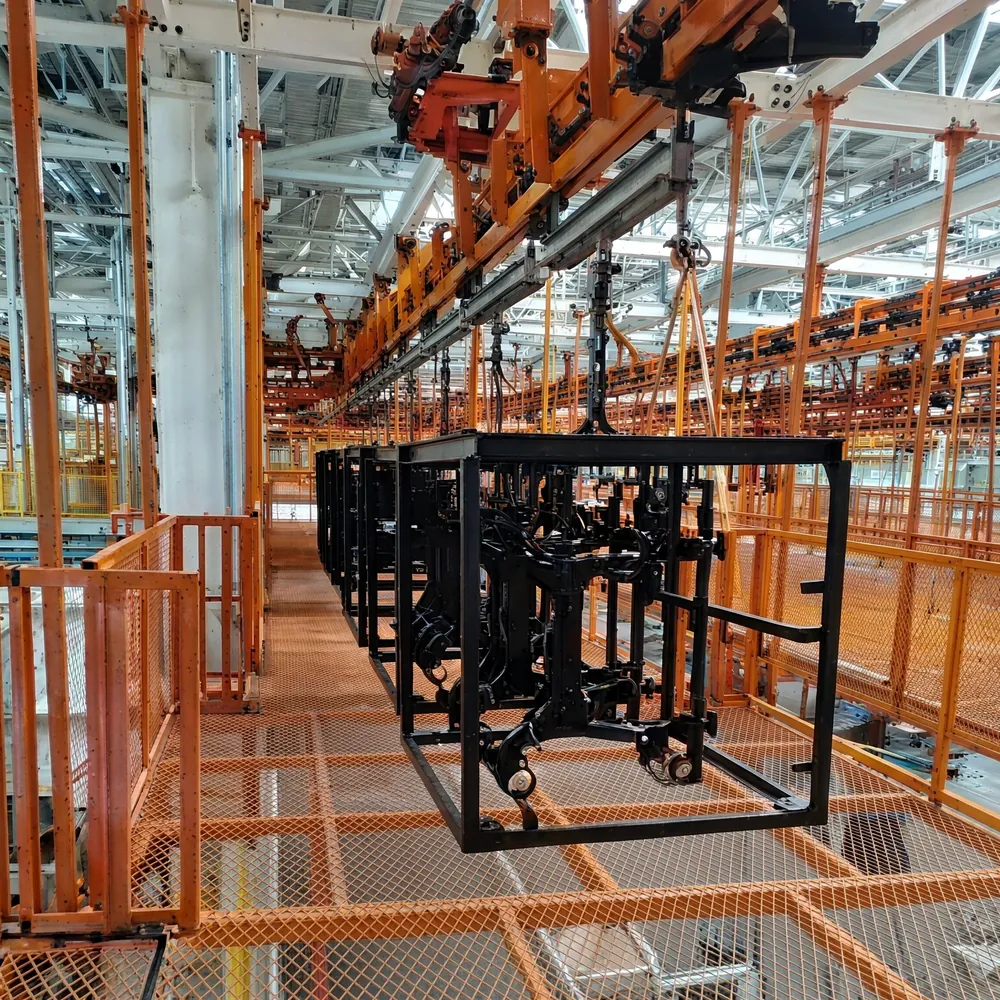
Behind every overhead conveyor is an electrical system: a main control panel with PLC and drives, local station controls for operators, sensors along the line and the wiring that connects them.
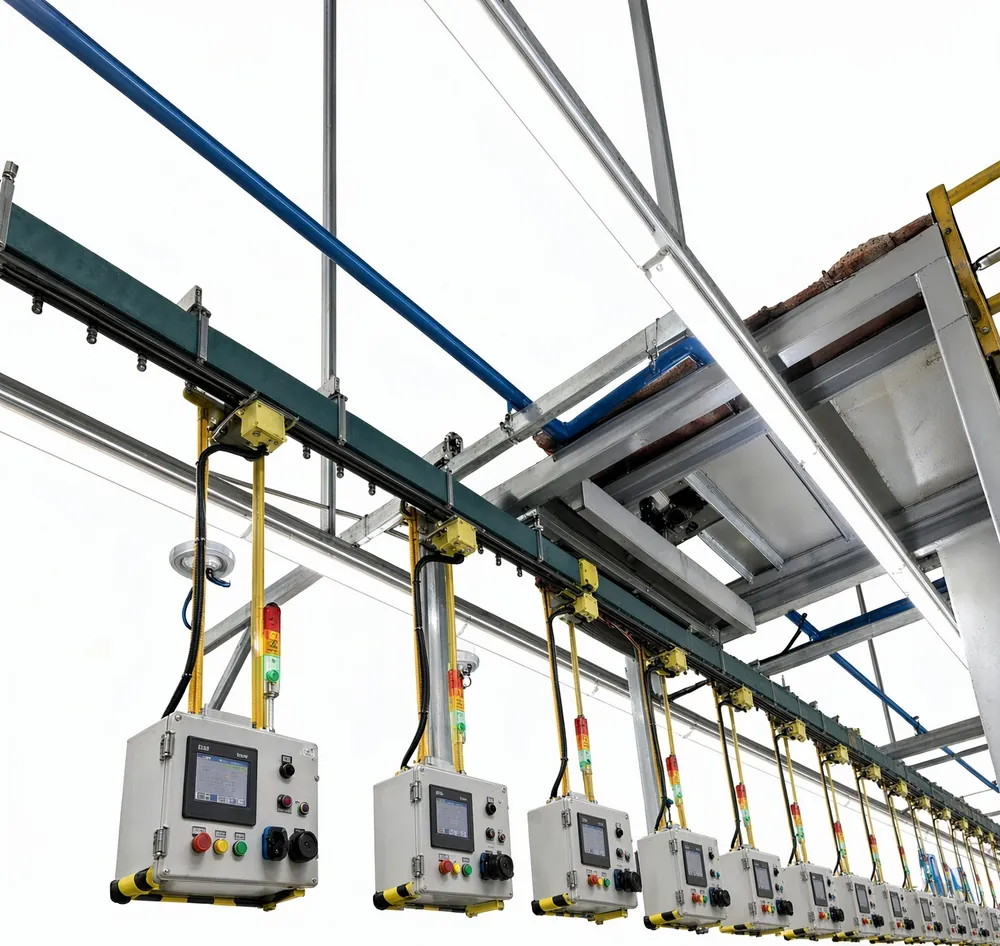
Inside the main control panel
| Component | Purpose |
|---|---|
| Main switch and protection | Isolate and protect the supply |
| PLC | Runs the conveyor logic: drives, stops, switches, interlocks |
| Frequency inverters | Soft start and adjustable speed for drives |
| Safety relays or safety PLC | Emergency stops, gates and light curtains |
| Network components | Fieldbus to I/O, inverters and MES |
| Power supplies and terminals | Clean wiring and labelling |
Station controls and HMIs
- Start, stop and reset buttons where operators work
- Emergency stop within reach along the line
- Stack lights to show status at a glance
- HMI screens with clear alarms, manual modes and diagnostics
- Release buttons at manual stations on power and free lines
Enclosures and environment
Choose the enclosure protection rating for the location: dusty or wet areas need higher IP ratings. Cabinets near ovens may need cooling. In and around paint booths, electrical equipment must suit the hazardous area classification, for example under ATEX in the EU or NFPA rules in the US.
Documentation
- Electrical drawings and terminal lists as built
- PLC program with comments, backed up
- I/O list and network overview
- Alarm list with causes and actions
Questions to ask your supplier
- Which PLC and inverter brands are used?
- How are emergency stops and safety circuits designed?
- What enclosure rating is used in each area?
- Is the PLC program open and documented for our team?
See controls and automation and carrier tracking.
Common mistakes to avoid
- Undocumented PLC changes made during commissioning
- Emergency stops out of reach at some stations
- Enclosures not suited to dusty, wet or hot areas
- No spare inverter or parameter backup on site
Panel acceptance checklist
| Check | Method |
|---|---|
| Wiring | Compare with drawings; check terminals and labels |
| I/O | Test every input and output |
| Safety | Test each emergency stop and interlock |
| Drives | Direction, speed, overload settings |
| HMI | Screens, alarms, manual modes |