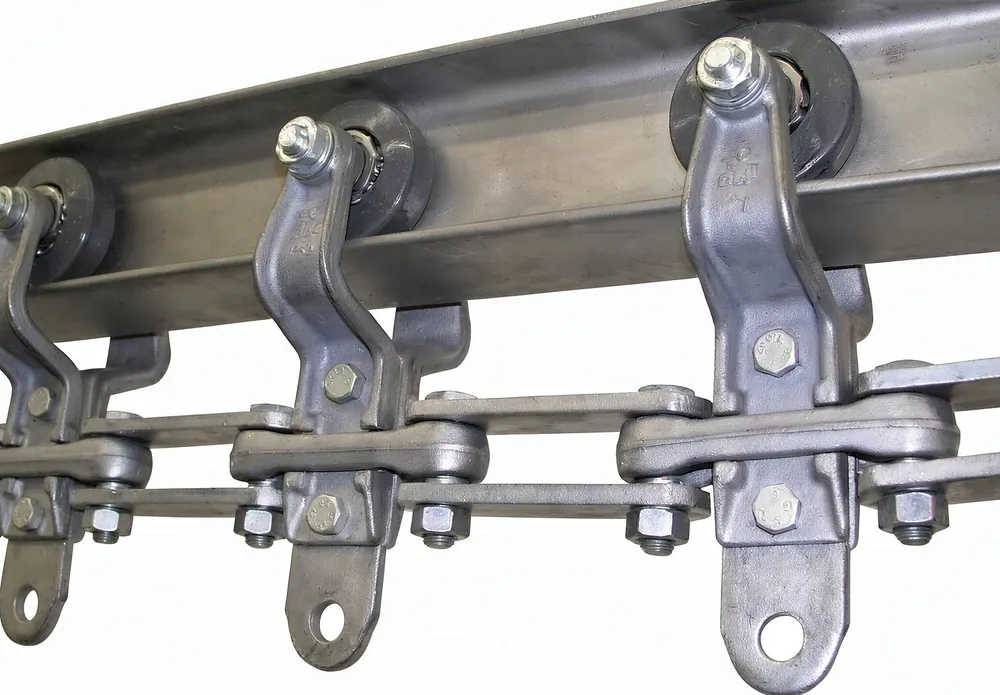
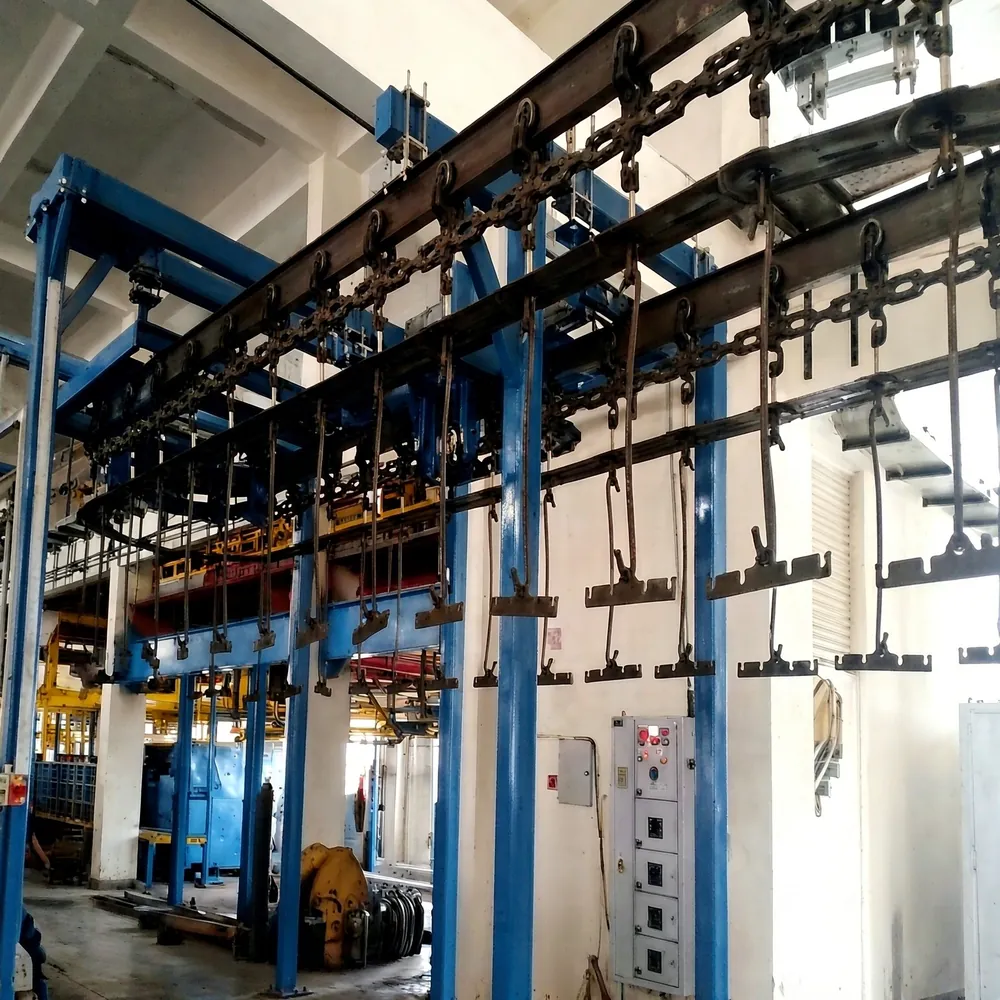
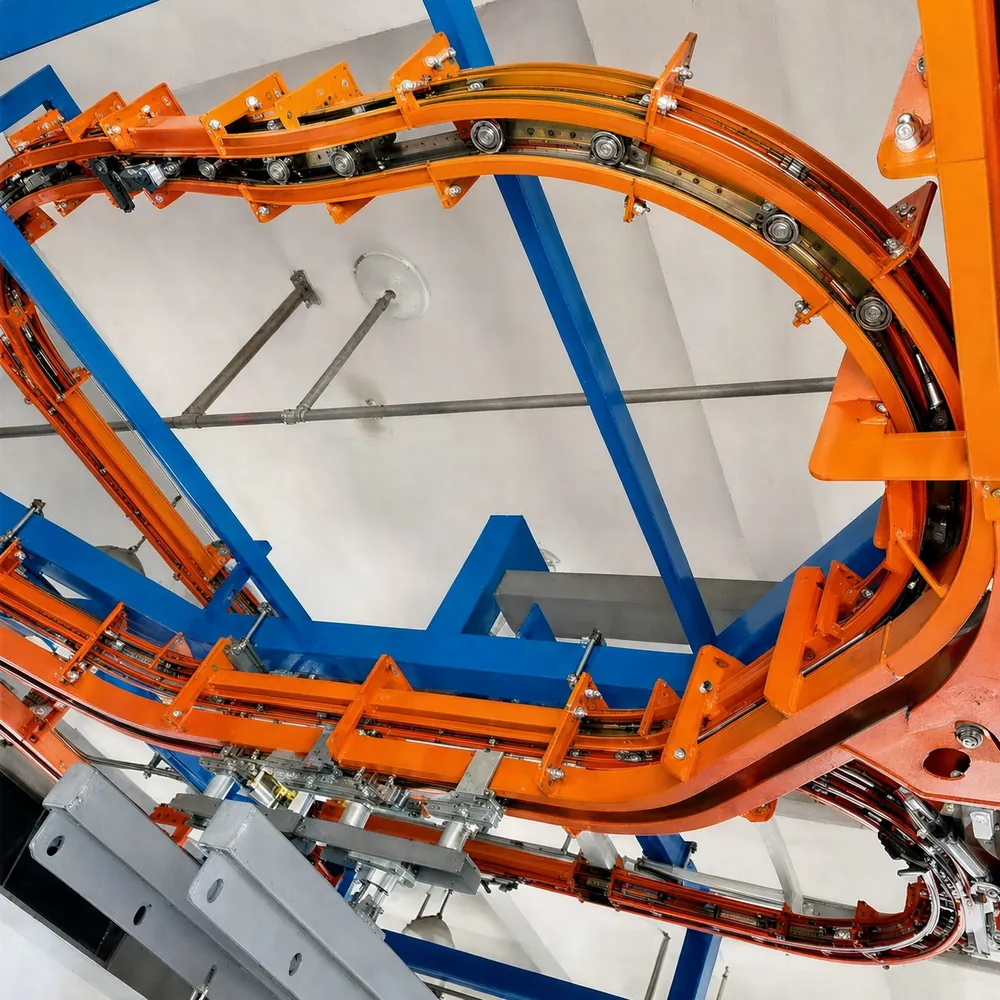
In meat and poultry processing, products hang from shackles or hooks and travel overhead through every step: hanging, scalding, defeathering, evisceration, chilling and cut-up. The conveyor sets the line speed and has to meet the strictest hygiene rules in industry.
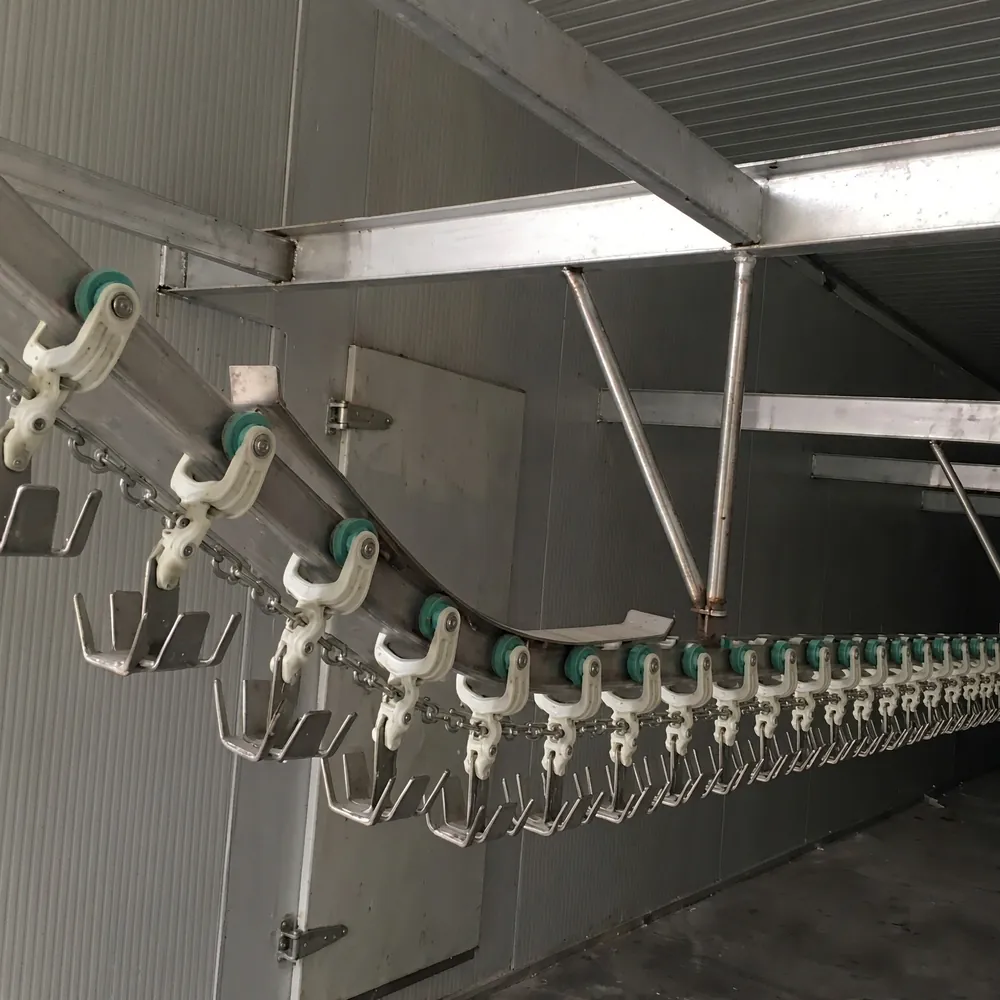
What makes food conveyors different
| Topic | Food processing requirement |
|---|---|
| Materials | Stainless steel track and structure; food-safe plastics for trolleys and guides |
| Cleaning | Daily washdown with water, detergents and sanitisers |
| Lubrication | Food-grade lubricants (for example NSF H1 registered) where contact is possible |
| Surfaces | Smooth, sloped, without crevices where residue can collect |
| Environment | Wet, cold rooms, chillers and temperature changes |
| Hygiene zones | Separation of dirty and clean areas along the line |
Hygienic design principles
- Avoid horizontal ledges and hollow sections that trap water and residue
- Use continuous welds and round profiles where possible
- Keep drives, take-ups and lubricators above or away from exposed product
- Allow the whole conveyor to be reached for cleaning and inspection
- Choose fasteners and bearings that tolerate washdown chemicals
Guidance from organisations such as EHEDG and 3-A is widely used as a reference for hygienic equipment design.
Shackles, hooks and trolleys
Shackles hold birds by the legs; hooks and gambrels carry larger cuts. Plastic trolley bodies reduce noise and weight and resist corrosion. Shackle design must suit the product size and the automatic equipment along the line, so changes in bird size or product mix often mean new shackles.
Line speed and layout
Line speed = products per minute × shackle pitch
Example: at 9,000 birds per hour (150 per minute) and a shackle pitch of 6 in (about 0.15 m), the chain runs at roughly 23 m/min. Every machine along the line is synchronised to this speed, so the conveyor and processing equipment are planned together.
Questions to ask your supplier
- Which materials and finishes are used for track, trolleys and structure?
- Which lubricant is used, and is it food-grade where needed?
- How is the conveyor cleaned, and how long does cleaning take?
- How are drives and take-ups protected from washdown?
- How is the conveyor synchronised with processing machines?
Read more about chain lubrication and overhead chain conveyor systems, or contact HITREE.
Common mistakes to avoid
- Using painted carbon steel above exposed product, which corrodes and flakes
- Hollow profiles without drainage that trap water and residue
- Standard grease on parts that can drip onto product
- Drives placed where they are hosed down every shift
Daily cleaning routine (example)
| Step | Purpose |
|---|---|
| Dry clean | Remove solid residue from shackles and guides |
| Pre-rinse | Wash away loose soil |
| Detergent and dwell | Break down fat and protein |
| Rinse | Remove detergent |
| Sanitise | Reduce microorganisms on surfaces |
| Inspect | Check for residue, damage and missing parts before start-up |
Follow your plant's validated sanitation procedure and chemical supplier instructions.