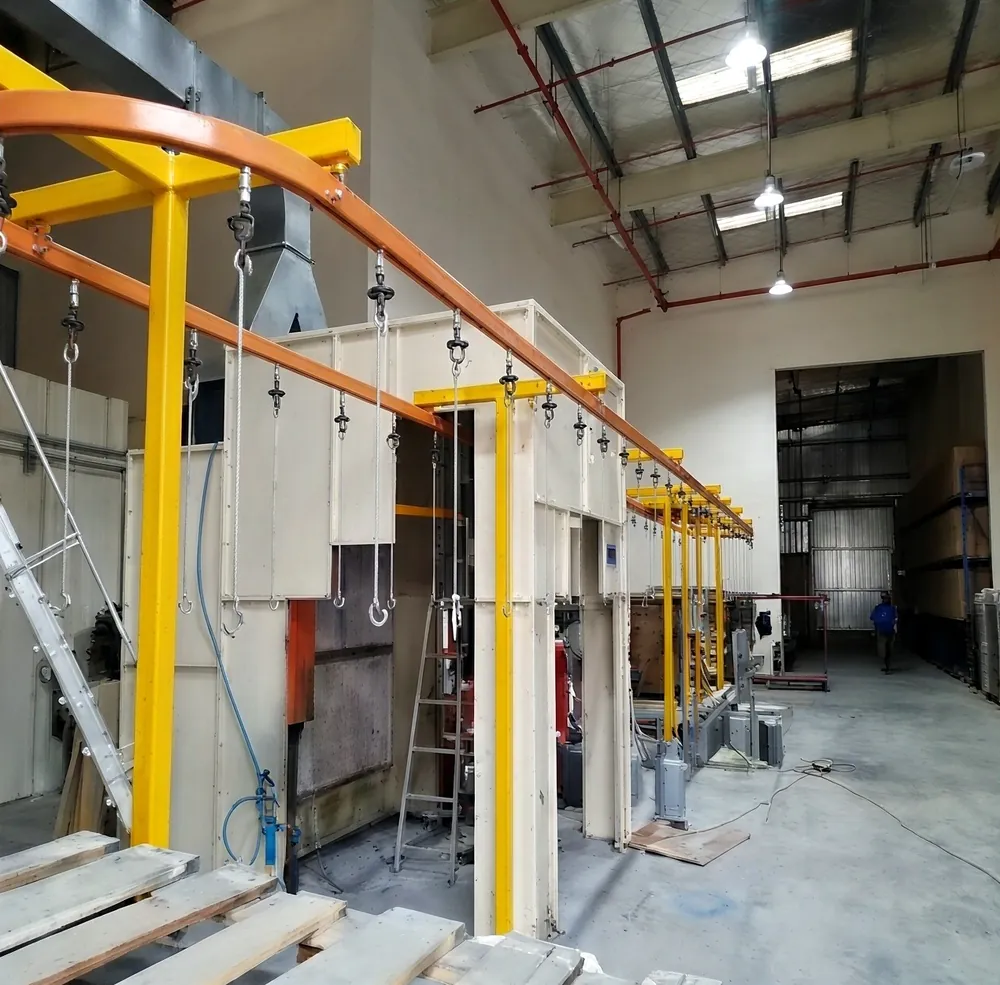
Pretreatment removes oil, dirt and oxides and applies a conversion coating that improves paint adhesion and corrosion resistance. In conveyorized lines it happens in a spray tunnel with several stages, each with its own tank and pumps.
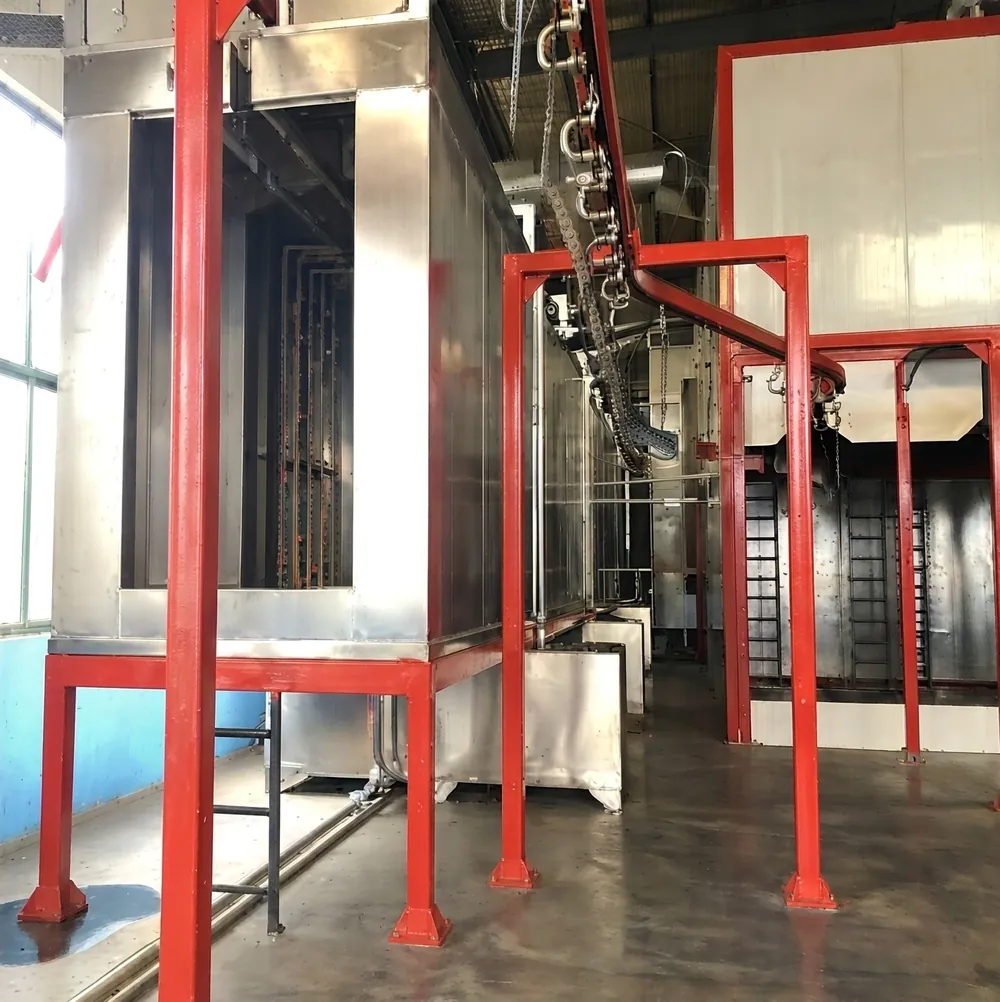
Typical stages
| Stage | Purpose |
|---|---|
| Degrease | Remove oil and dirt |
| Rinse | Remove degreaser |
| Conversion coating | For example iron phosphate, zinc phosphate or zirconium-based treatments |
| Rinse | Remove excess chemicals |
| Final rinse (often deionised water) | Avoid spots and salts on the surface |
| Dry-off oven | Dry parts before coating |
The number and type of stages depend on the substrate, coating and quality requirements.
Sizing stage lengths
Stage length = line speed × spray time + drain zone
Example: at 2 m/min, a degreasing stage with 90 seconds of spray needs 3 m of spray zone, plus a drain zone of about 1 m so chemicals do not carry into the next stage.
Conveyor design in the tunnel
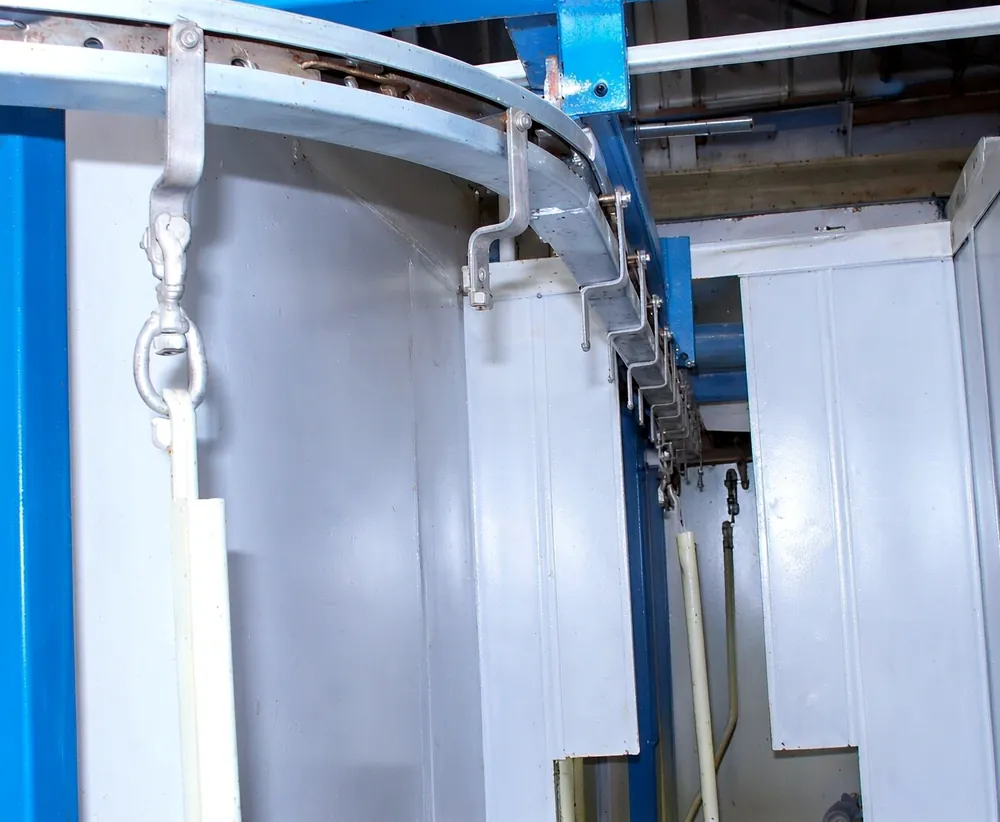
- Run the conveyor above the tunnel roof with hangers through a narrow slot
- Use slot seals or flaps to limit spray escaping
- Use corrosion-protected or stainless parts in and over the tunnel
- Fit drip pans so condensation and drips do not fall back onto parts
- Keep drives, take-ups and lubricators outside the tunnel
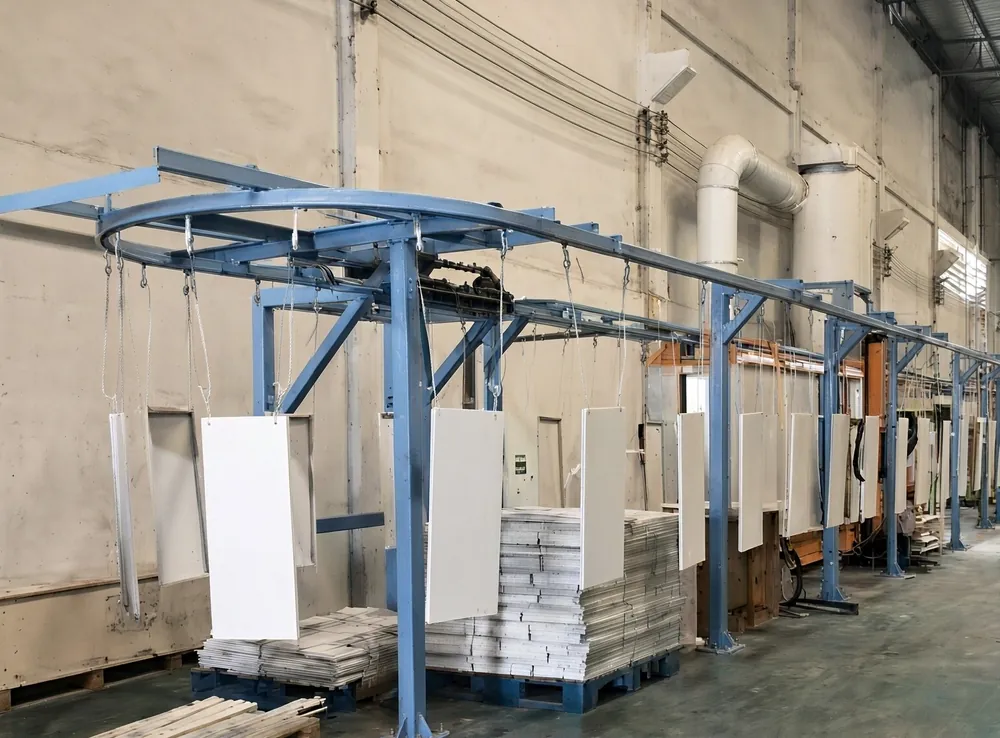
Hanging for drainage
Parts should hang so water drains freely from cavities and does not pool. Tilted hanging can help. Water trapped in cavities causes spots and blisters after coating.
Questions to ask your supplier
- How long is each stage at our line speed?
- How is the conveyor protected from spray and chemicals?
- Where do drips from the conveyor go?
- How are drain zones sized to limit carry-over?
Next steps in the line: powder coating line layout, e-coat and curing ovens.
Common mistakes to avoid
- Drain zones too short, so chemicals carry over between stages
- Conveyor parts above the tunnel without corrosion protection
- Hanging parts so water pools in cavities
- Drives and lubricators placed where spray reaches them
Pretreatment conveyor checklist
| Topic | What to define |
|---|---|
| Stages | Number, chemistry and spray time |
| Lengths | Spray and drain zone per stage at line speed |
| Slot | Width and seals |
| Materials | Stainless or protected parts near the tunnel |
| Drainage | Part orientation and drip pans |