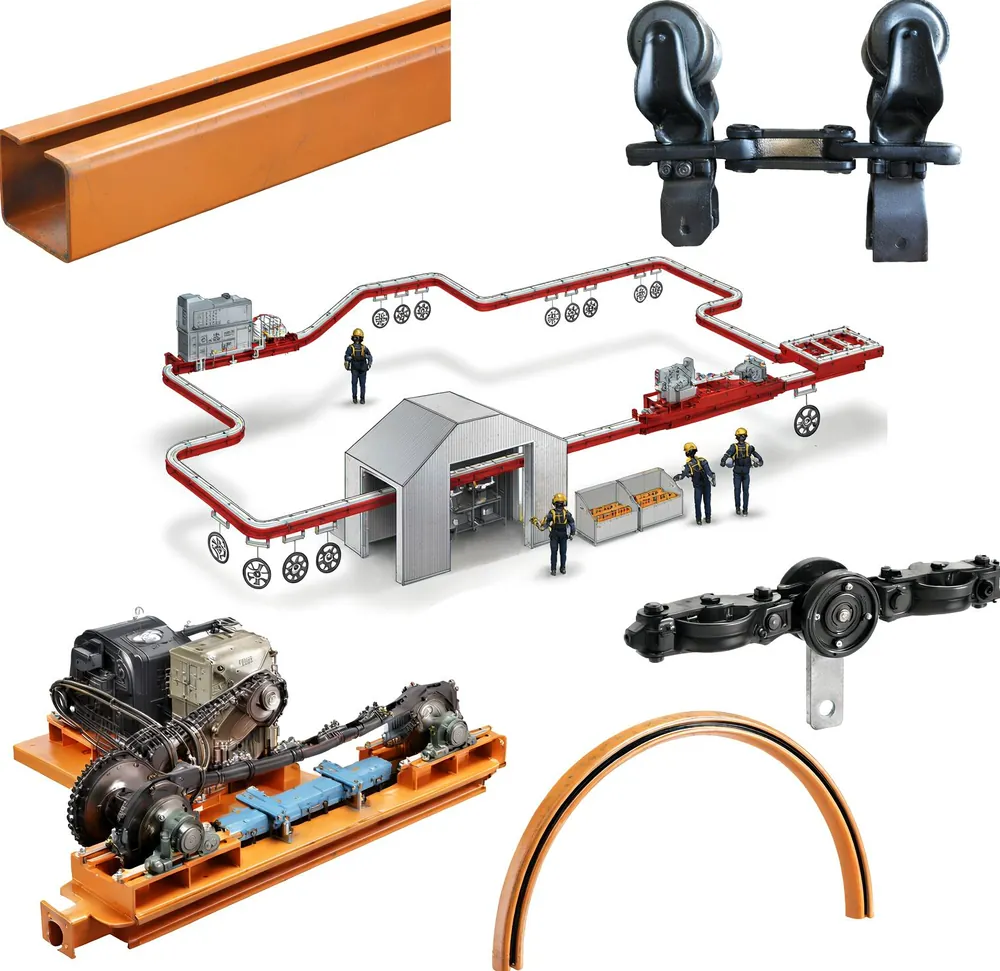
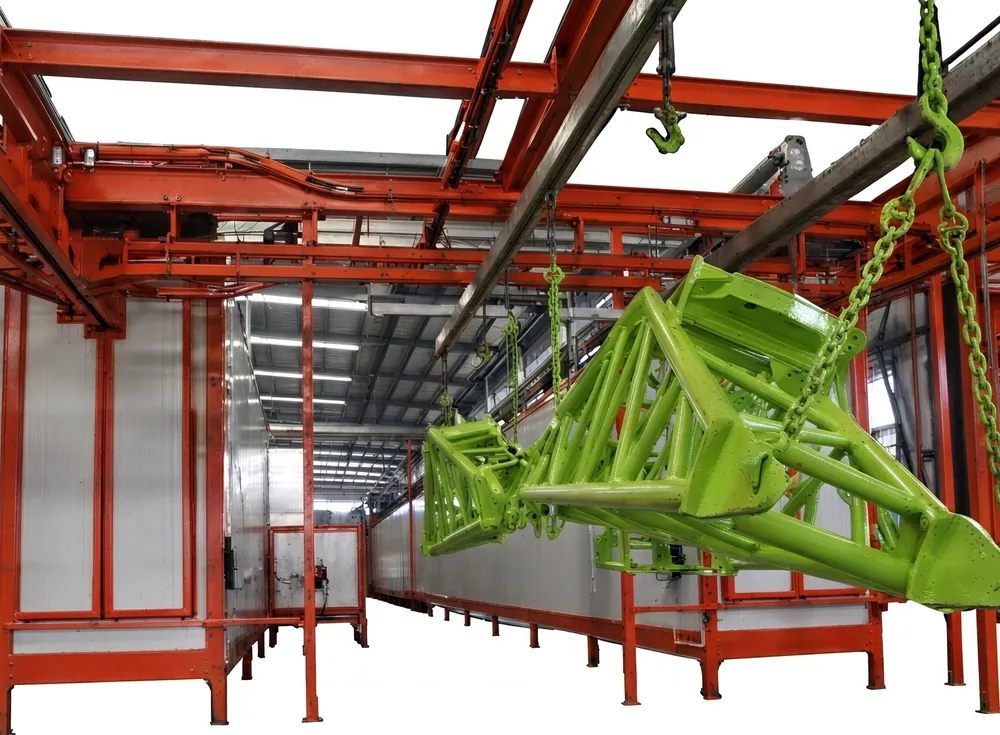
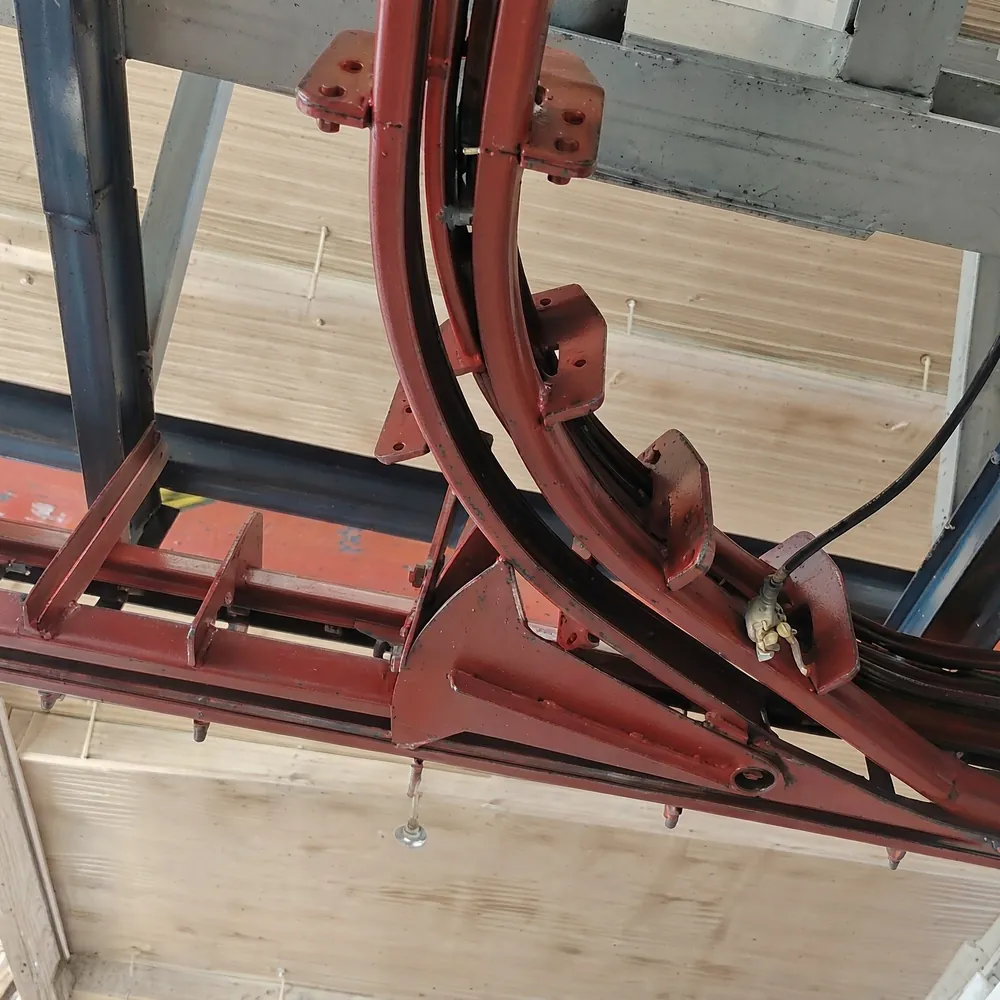
Overhead conveyors link assembly stations for appliances, electrical equipment, machinery and many other products. They carry products, sub-assemblies or parts between stations and keep aisles open for people and material supply.
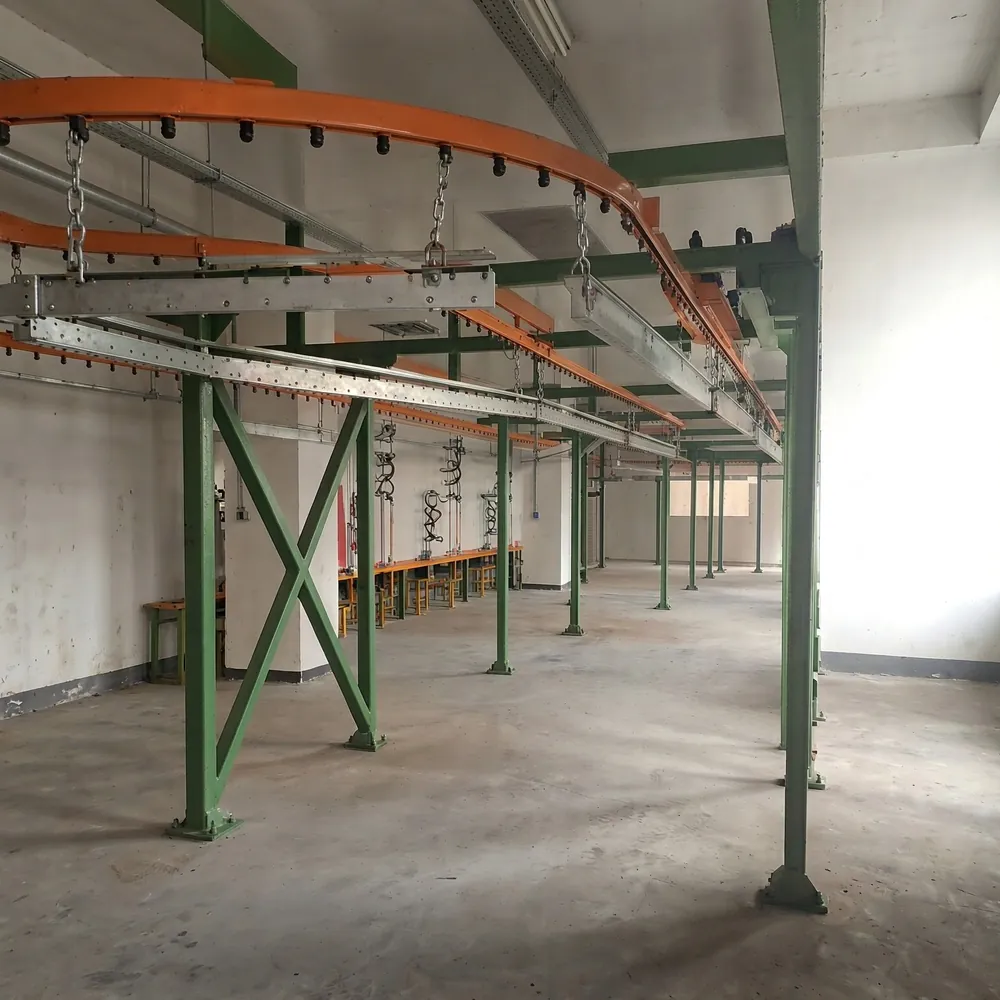
Continuous or indexing?
| Flow | How it works | Best for |
|---|---|---|
| Continuous | Products move at constant speed while operators work | Short, repetitive tasks; high volume |
| Indexing | Products stop at each station, then move together | Tasks needing a stationary part |
| Power and free | Each product stops and releases independently | Different task times; buffers between stations |
Workstation design
- Set hanging height so the work area sits near elbow height
- Use drop sections where parts must come down to a bench
- Allow operators to pull a part off the line for longer tasks
- Plan parts supply from the aisle side
- Keep the conveyor clear of operators' heads and reach zones
Load bars and fixtures
Load bars spread a product over two trolleys and can carry several hooks. Fixtures that hold the product in a fixed orientation make work faster and more consistent. Quick-change fixtures help when models change; see carrier design.
Worked example: balancing stations
A line must build 120 units per hour, a takt of 30 seconds. One station needs 50 seconds. On a continuous conveyor this station would need a working zone almost twice as long, or two operators. On a power and free line, two parallel stations each get 60 seconds per unit. See line balancing.
Questions to ask your supplier
- Continuous, indexing or power and free, and why?
- What hanging heights are planned at each station?
- How will longer tasks and rework be handled?
- How can the line be changed for new models?
HITREE designs assembly conveyors for general manufacturing; contact us with your process.
Common mistakes to avoid
- Hanging height that forces operators to reach above shoulders
- No way to pull a product off the line for longer tasks
- Continuous flow where tasks need a stationary part
- No space reserved for extra stations as volumes grow
Assembly conveyor checklist
| Topic | What to define |
|---|---|
| Takt | Units per hour and available time |
| Stations | Task list and time per station |
| Heights | Working height per task |
| Fixtures | Orientation and quick change |
| Supply | Parts delivery to each station |