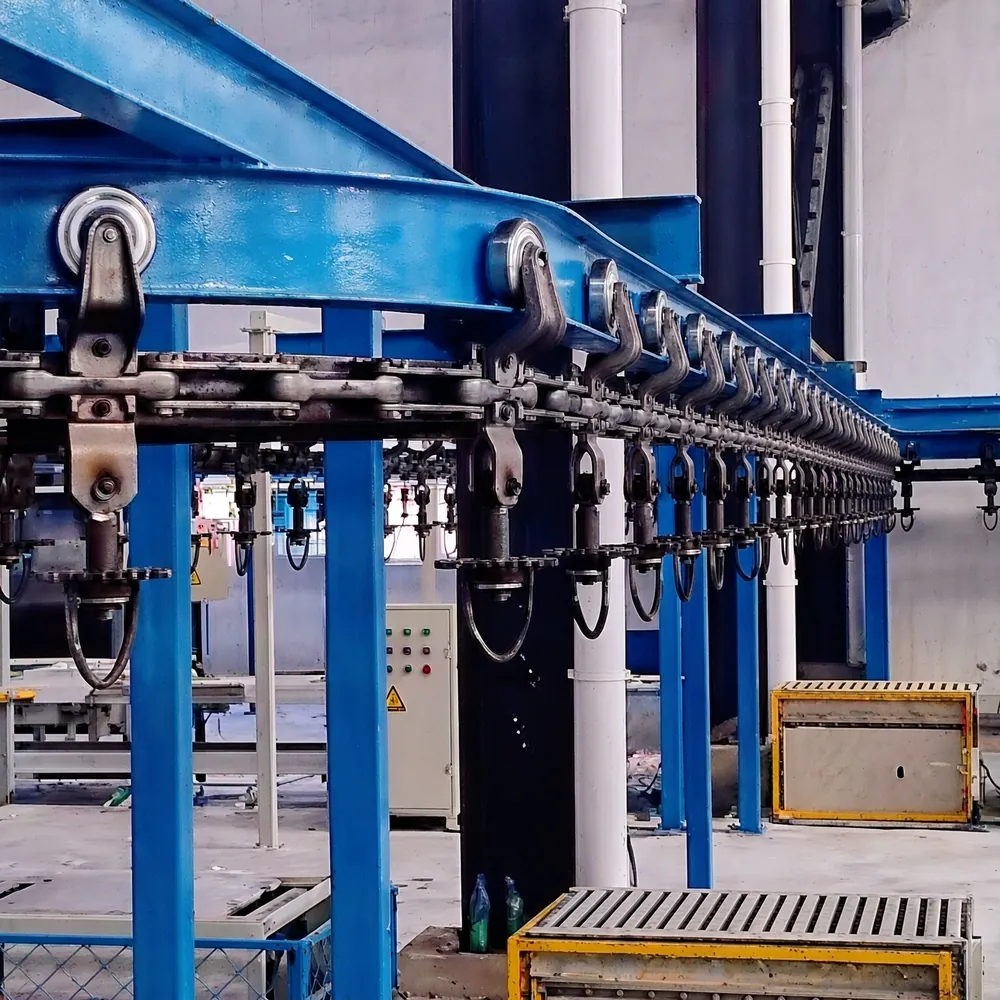
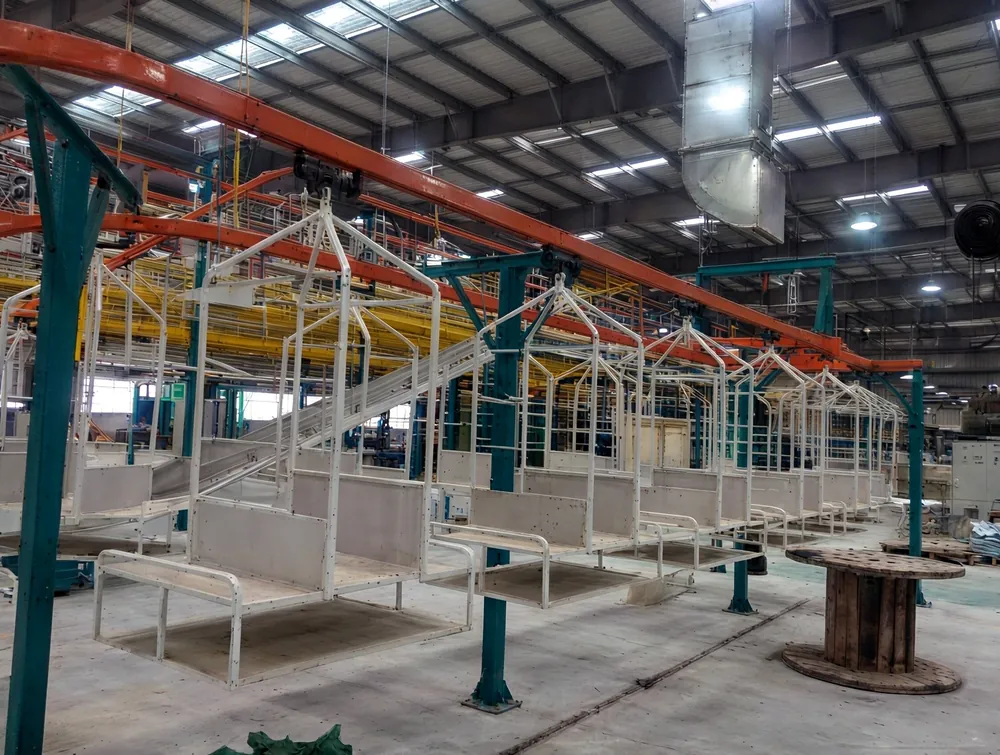
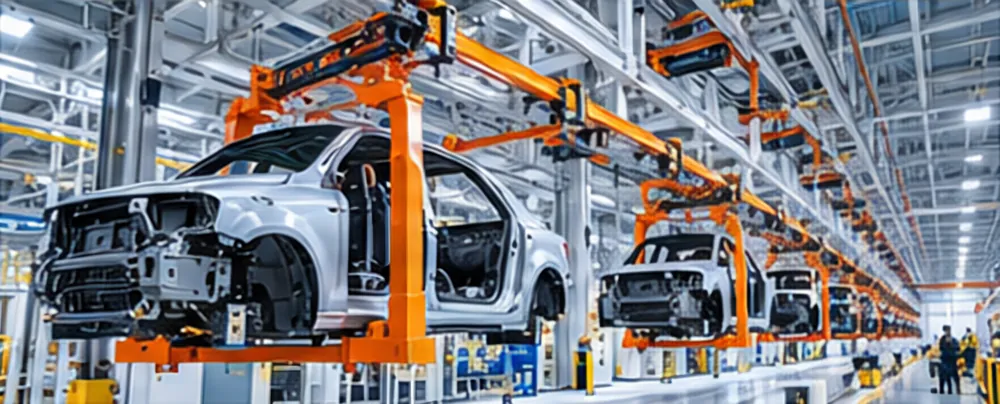
In a paint or powder line, the conveyor carries every part through the spray booth at a steady speed. The booth design and the conveyor design have to work together: openings, air flow, speed and grounding all depend on both.
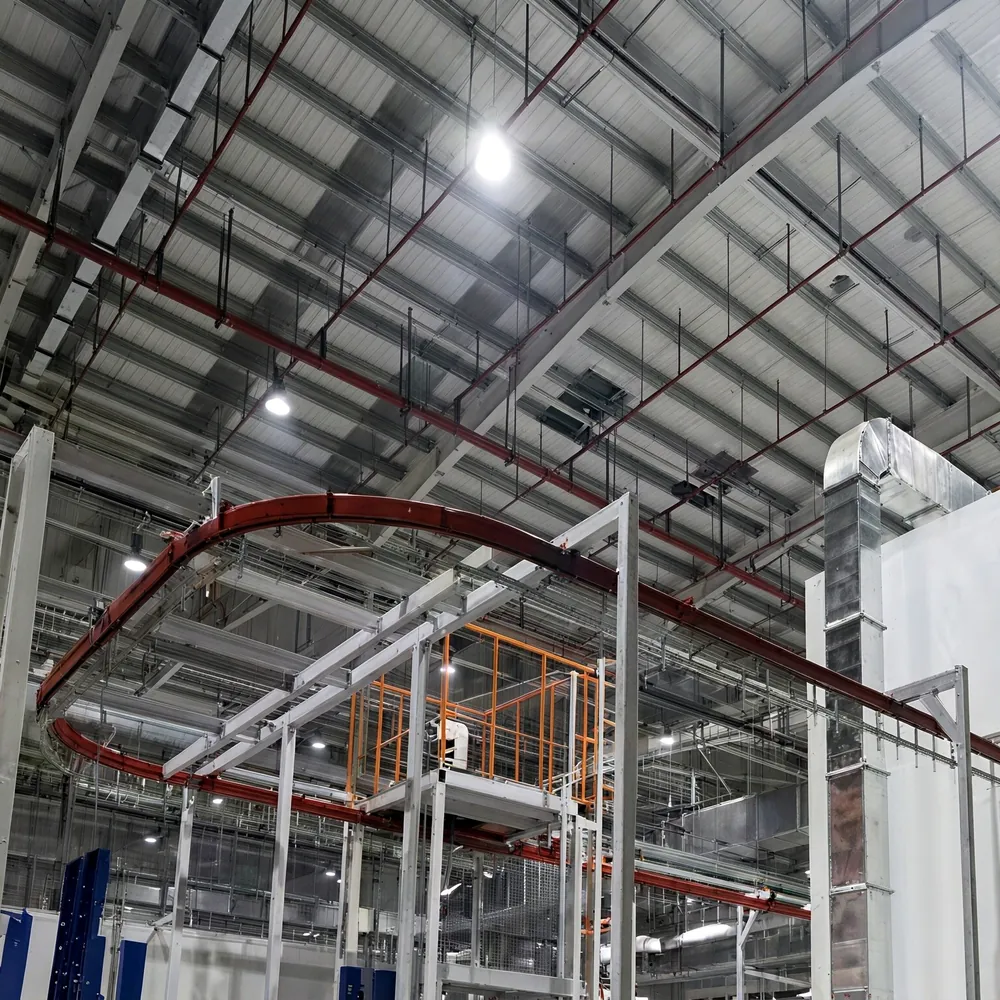
The conveyor slot
In most booths, the conveyor runs above the booth roof and the hangers pass through a narrow slot. This keeps the chain and lubricant out of the spray zone.
- Keep the slot as narrow as the hanger allows
- Use slot covers or brush seals to limit overspray on the conveyor
- Keep the conveyor out of the booth air stream
- Plan regular cleaning of the slot area and hangers
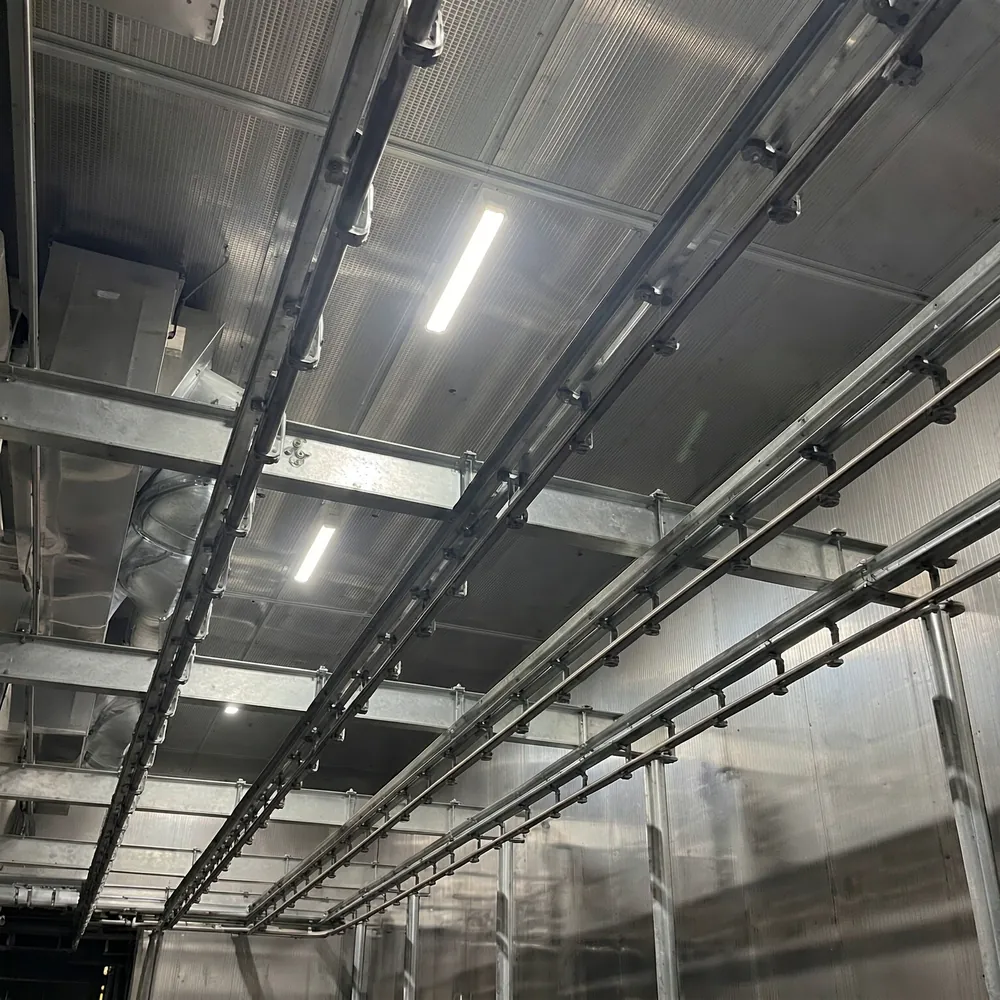
Openings and part silhouette
Entry and exit openings should follow the largest part silhouette plus a safe margin. Large openings waste booth air and let powder escape; tight openings risk collisions when parts swing. Steady line speed and stable carriers help keep openings small.
Line speed and coating quality
- Constant speed through the booth for even film thickness
- Gun stroke and number of guns matched to line speed and part height
- Part detection to trigger guns only when parts are present
- Hanging density that leaves enough gap for spray access
See powder coating conveyor systems for line speed and hanging density calculations.
Rotating hangers
Rotating hangers turn parts as they pass the guns, so all sides are coated. A sprocket on the hanger engages a fixed chain or rack at the booth. This is simple and effective for round and complex parts on overhead chain conveyors.
Grounding in powder booths
Electrostatic powder needs a good path to ground through the hanger, trolley and track. Keep contact points clean, strip hangers regularly and check ground resistance as part of maintenance.
Safety in spray booths
Spray booths can contain flammable or combustible atmospheres. Electrical equipment in and around the booth, including conveyor sensors and drives, must suit the hazardous area classification. Applicable rules include ATEX requirements in the European Union and NFPA 33 in the United States; confirm the requirements for your site with your safety officer.
Checklist for the booth passage
| Topic | What to define |
|---|---|
| Slot | Width, covers or seals, cleaning access |
| Openings | Size from part silhouette plus margin |
| Speed | Constant speed matched to gun setup |
| Hangers | Rotation, contact points, cleaning |
| Electrical | Equipment suitable for the hazardous area |
| Maintenance | Access to track and hangers without entering the booth |
HITREE designs conveyors for paint and powder lines. Read the paint shop conveyor guide or contact us.
Worked example: matching line speed to the booth
A booth has automatic guns covering a part height of 1.5 m. Parts up to 1.2 m tall hang at 0.6 m spacing, and the line runs at 2 m/min. The gun movers are set so each part receives the required number of passes at that speed. If production asks for 2.5 m/min, the booth needs more guns or faster movers, not only a faster conveyor.
Questions to ask about a spray booth conveyor
- How wide is the conveyor slot and how is it sealed?
- Are drives, take-ups and lubricators outside the booth?
- Which electrical equipment is inside the hazardous area, and is it rated for it?
- How are hangers cleaned and grounded?
- Can the line speed be changed without changing booth settings?