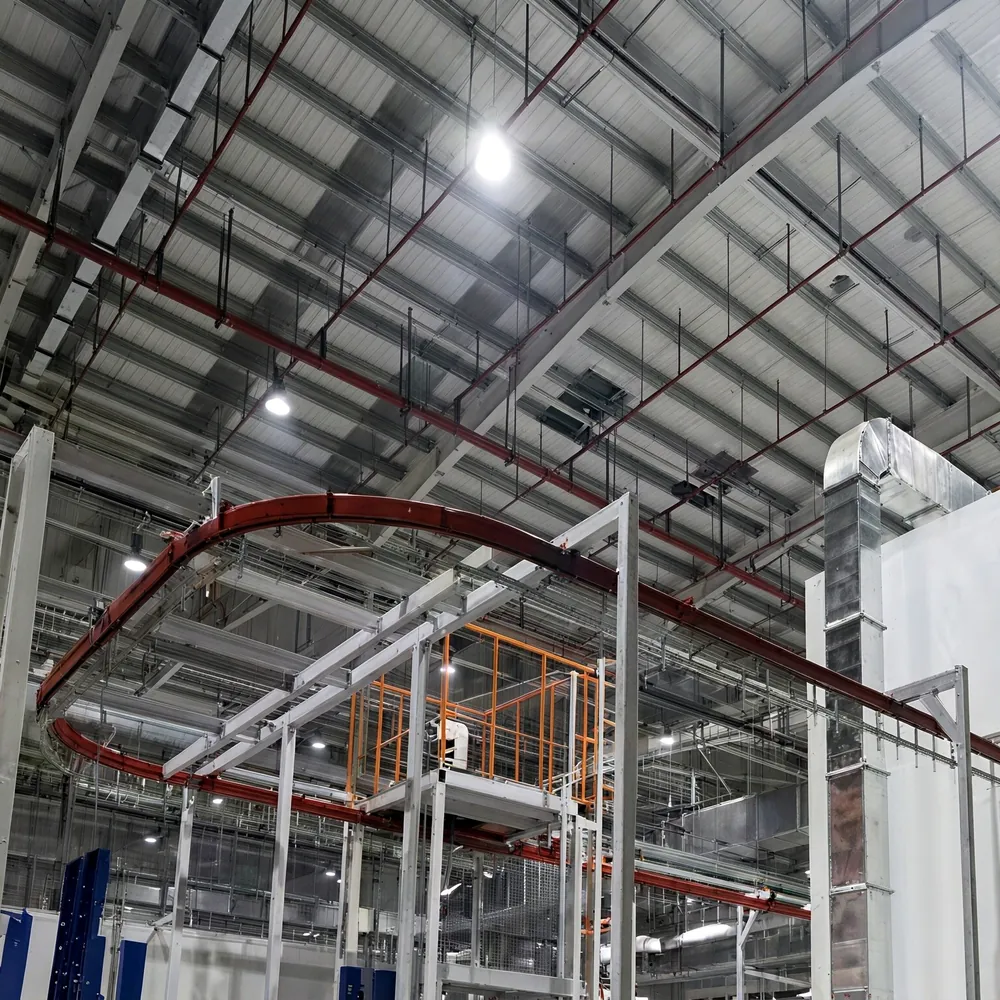
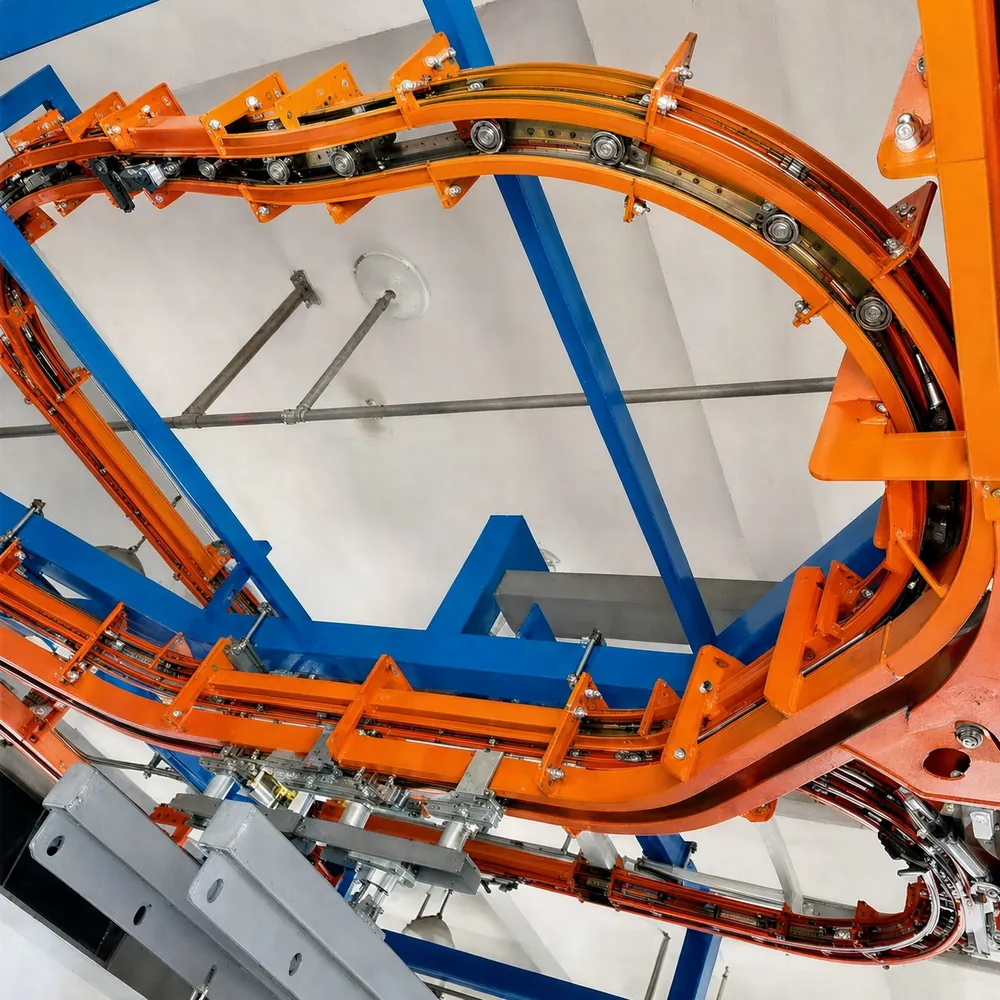
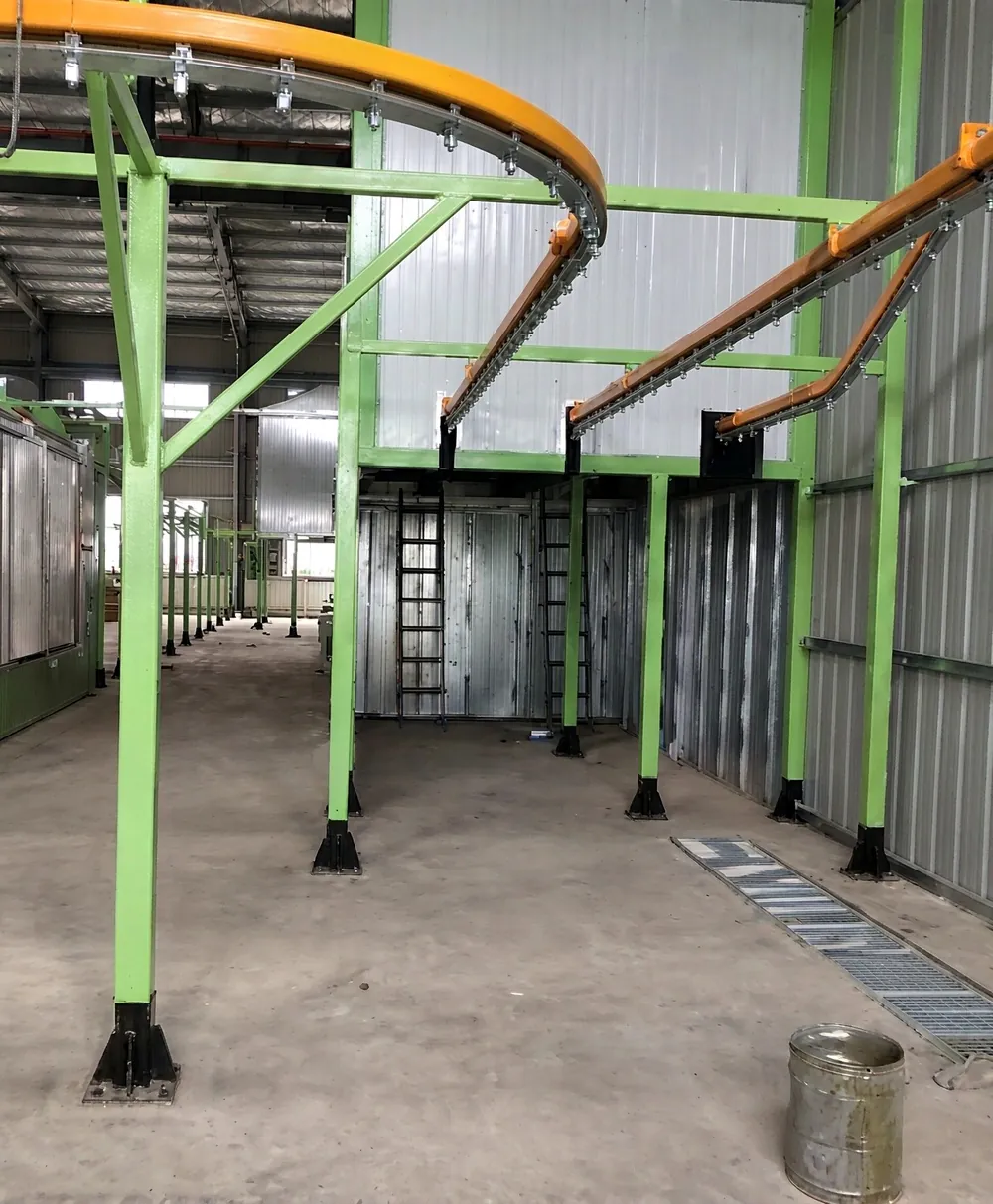
Chain conveyors run for thousands of hours a year. Correct lubrication reduces wear, chain elongation, noise and energy use. Too little lubricant wears the chain; too much drips onto products and collects dirt.
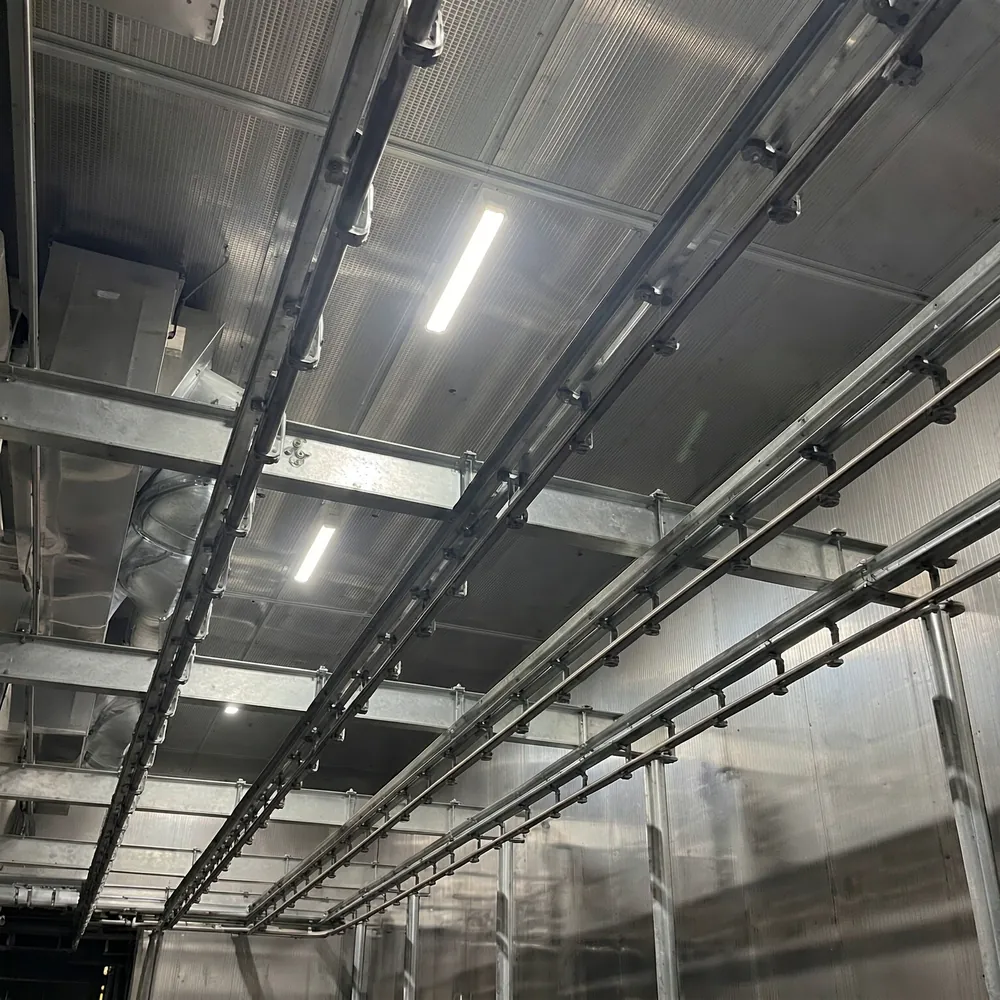
What needs lubrication
| Point | Why |
|---|---|
| Chain joints (pins and links) | Wear here causes chain elongation |
| Trolley wheels and bearings | Rolling wear, noise and drive power |
| Pusher dogs and trolley dogs (power and free) | Contact wear at engagement |
| Curve rollers and wheels | High loads in curves |
| Drive and take-up wear parts | Follow the manufacturer's instructions |
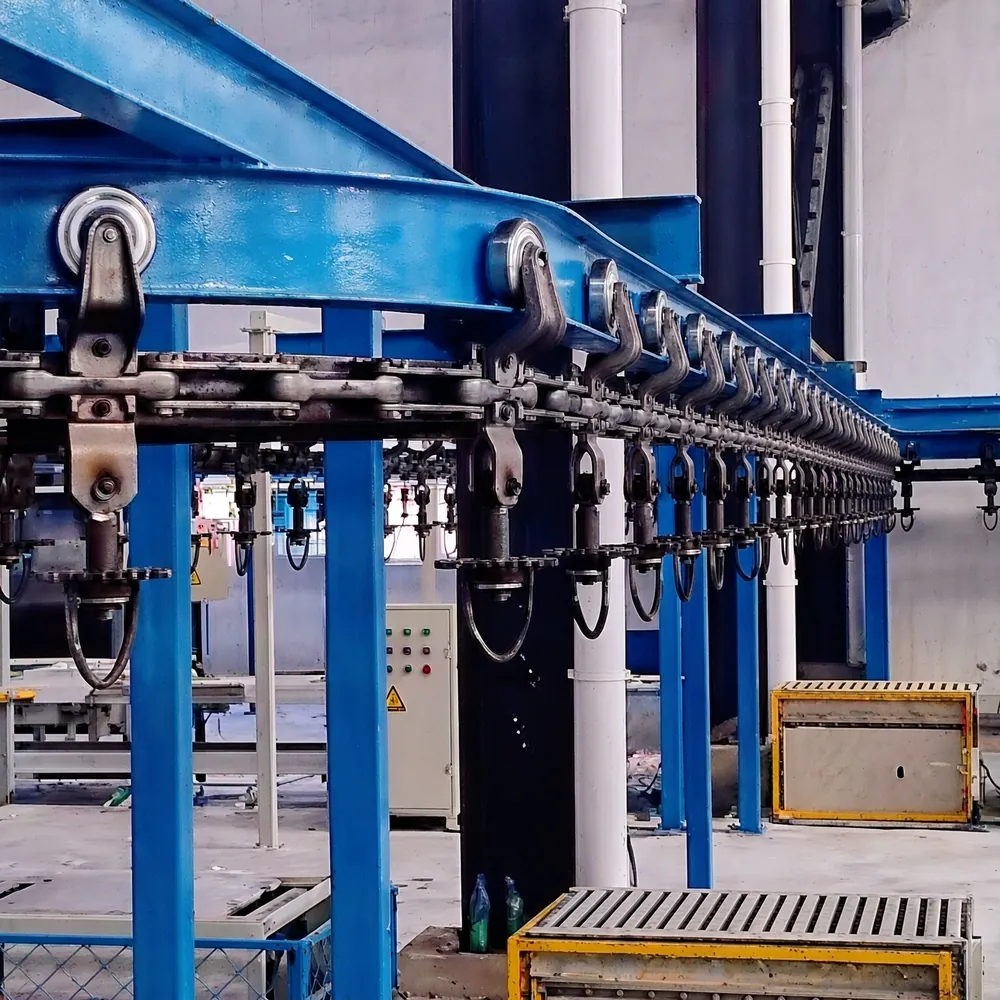
Lubrication methods
| Method | Notes |
|---|---|
| Automatic drip or spray lubricator | Applies a set amount as the chain passes; most common |
| Brush or applicator | Applies lubricant to chain and wheels by contact |
| Centralised system | Feeds several points from one reservoir |
| Manual lubrication | Small or rarely used conveyors; risk of uneven application |
Automatic lubricators should be timed to the chain speed so each joint gets the right amount, and placed where excess cannot drip onto products.
Choosing the lubricant
- Ambient lines: a conveyor chain oil with good penetration into joints
- Ovens: high-temperature lubricant that does not carbonise; see our curing oven guide
- Paint and powder lines: silicone-free lubricant, because silicone contamination causes paint defects such as craters
- Wet zones: lubricant that resists wash-off
- Sensitive products: check compatibility with your quality requirements
Signs of poor lubrication
- Squeaking or noisy trolley wheels
- Jerky chain movement, especially on inclines
- Rising drive current
- Faster chain elongation than expected
- Drips, stains or dirt build-up on products and floors (too much lubricant)
A simple lubrication routine
| Interval | Task |
|---|---|
| Daily | Check lubricator level and function; look for drips |
| Weekly | Listen along the line for noisy wheels; check lubricant reaches joints |
| Monthly | Measure chain elongation; clean dirt and carbon build-up |
| Annually | Review lubricant type and quantity against wear data |
Adapt intervals to your operating hours and the manufacturer's instructions.
Combine this with our maintenance checklist. HITREE supplies lubricators and spare parts for its conveyors; contact us.
Worked example: finding the right amount
A plant notices stains on parts after the oven and rising chain elongation at the same time. Investigation shows the lubricator is set too high and placed just before the oven: excess lubricant carbonises in the heat and drips, while the joints still run dry because the oil does not penetrate before it burns. Moving the lubricator to a cool section, reducing the amount and switching to a high-temperature lubricant solves both problems.
Questions to ask your supplier about chain lubrication
- Which lubricant is approved for each zone of our line?
- Where should lubricators be placed, and how are they timed?
- How do we measure chain elongation, and what is the replacement limit?
- Which lubricator spare parts should we stock?